Structural reform, fiscal credibility, and the transition to execution risk economics
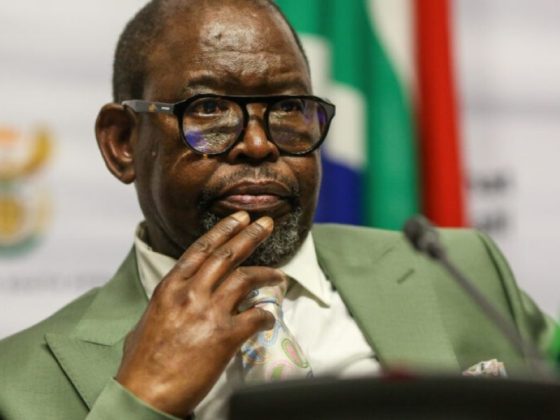
The 2026 Budget, delivered by Finance Minister Enoch Godongwana on 25 February 2026, represents a structural inflection point in South Africa’s macroeconomic trajectory.
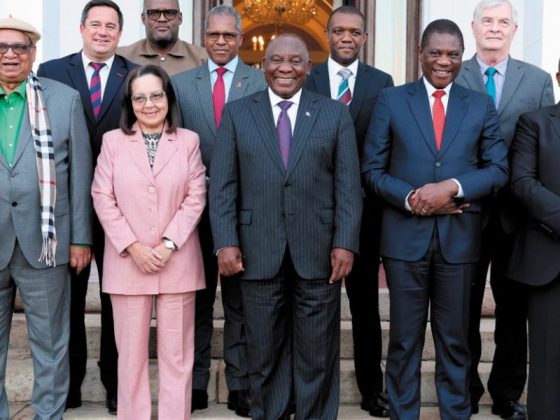
Importantly, the Budget closely mirrors and operationalises the policy priorities outlined by President Cyril Ramaphosa in his 2026 State of the Nation Address (SONA) two weeks ago.
The two speeches function as a single policy narrative: stabilise the macroeconomy, rebuild state capacity, crowd in private investment, and drive growth through infrastructure-led development rather than short-term fiscal stimulus.
After years of institutional damage caused by State Capture, sovereign credit downgrades, pandemic shocks, and FATF grey listing, South Africa’s public finance trajectory is finally stabilising.
Debt is projected to peak at 78.9% of GDP before gradually declining, and the country has secured its first sovereign credit rating upgrade in 16 years. These outcomes reinforce SONA 2026 commitments to restore state credibility, strengthen governance, and rebuild economic confidence.
The government is not declaring victory, but rather attempting to lock in fragile gains through disciplined fiscal management.
For business and investors, the central insight is that South Africa is transitioning from crisis-risk management toward institutional normalisation. The government is deliberately prioritising credibility, policy predictability, and infrastructure-led growth rather than rapid demand stimulation.
The withdrawal of R20 billion in previously proposed tax increases, made possible by stronger-than-expected revenue performance, signals that fiscal consolidation will rely more on economic performance and compliance enforcement than on new tax burdens.
At the same time, the macroeconomic environment remains structurally constrained. Growth is projected at 1.6% in 2026, rising only gradually toward 2% by 2028.
While the direction of growth is positive, the pace is insufficient to drive large-scale employment creation or rapid consumer demand expansion. Structural constraints – including logistics inefficiencies, municipal service failures, and energy transmission challenges – continue to shape economic performance.
Businesses therefore need to incorporate downside risk scenarios into strategic planning rather than assume rapid market expansion.
The global economic environment further reinforces this cautious outlook. Global growth is projected at 3.3% in 2026, with emerging markets continuing to drive global economic momentum. However, geopolitical fragmentation and trade policy uncertainty are reshaping global supply chains.
For South Africa, a small open economy with significant commodity export exposure, this makes trade diversification and regional economic integration increasingly important. Neutrality in global geopolitics is becoming harder to maintain in a world shaped by geoeconomic competition.
While South Africa continues to pursue a non-aligned foreign policy posture, neutrality increasingly carries strategic costs when great powers compete over supply chains and critical minerals.
Fiscal architecture and policy credibility
The fiscal architecture of the Budget reinforces long-term stability over short-term stimulus. The deficit is expected to improve to 4.5% of GDP in 2025/26 before declining to 3.1% over the medium term.
The introduction of a principles-based fiscal anchor is particularly important. Much like inflation targeting improved credibility in monetary policy, the fiscal anchor aims to institutionalise fiscal discipline and reduce discretionary political spending pressures.
For business and investment planning, this reduces sudden policy shock risk, even if it limits short-term fiscal stimulus potential.
Revenue performance has been stronger than expected, allowing government to withdraw planned tax increases. Instead, policy has focused on broadening the tax base and encouraging economic participation.
Income tax brackets were fully adjusted for inflation, reversing bracket creep.
Small business relief was particularly meaningful, with VAT registration thresholds rising from R1 million to R2.3 million and capital gains exemptions for small business sales increasing.
These measures support entrepreneurship, business formalisation, and generational wealth transfer among small business owners.
Macro stability and the GNU effect
Under President Ramaphosa and the GNU, fiscal consolidation has reduced macroeconomic tail risk. This political economy shift is particularly important for corporate and investment confidence.
The GNU has introduced stability in three important ways:
- Firstly, policy continuity has been preserved. Reform programmes focused on energy liberalisation, logistics restructuring, and fiscal discipline have remained largely intact.
- Secondly, the probability of abrupt populist fiscal expansion has declined, allowing Treasury to pursue consolidation without severe political backlash.
- Thirdly, institutional signalling to markets has improved, reflected in higher business confidence readings and stabilising macro indicators.
Inflation has remained within the South African Reserve Bank’s (SARB) target band near 3.5%, while unemployment has declined modestly to 31.4%.
These are not signals of rapid economic expansion but rather of stabilisation. The economic narrative has shifted from deterioration to repair.
For investors, this is important because political risk is moving from existential uncertainty toward manageable operational risk.
Trade, capital flows and regional integration
The Budget reinforces South Africa’s ambition to position itself as a regional financial and trade hub under the African Continental Free Trade Area (AfCFTA) framework. Restrictions on cross-border capital flows are being eased, including increases in discretionary allowances and transaction limits.
These reforms support regional trade expansion, tourism flows, and remittance channels. In a fragmented global trade environment, regional economic integration becomes an important hedge against external shocks.
South Africa is attempting to position itself as a gateway economy into the African market, leveraging its financial sector sophistication and regulatory infrastructure.
Infrastructure-led growth strategy
Infrastructure investment remains the primary mechanism for long-term growth. More than R1 trillion will be spent on infrastructure across public entities, provinces, and municipalities. However, the policy shift is not primarily about funding availability but about governance and delivery execution.
The introduction of performance-linked municipal grants represents one of the most significant local government fiscal reforms in years. Municipalities will now face financial consequences if service revenue is diverted away from maintenance and capital reinvestment.
This is particularly relevant for property markets, logistics networks, and utility-dependent businesses.
Energy reform remains one of the most important economic priorities. The Credit Guarantee Vehicle, developed in partnership with international development institutions, is designed to mobilise private capital for transmission infrastructure investment. Energy security is increasingly framed as a national competitiveness issue rather than simply a public service challenge.
Logistics reform is equally important. Transnet corridor recovery projects aim to restore export capacity for key commodities, supporting mining and industrial production.
Sectoral and consumer economy implications
Tax relief measures are likely to support modest consumption stability rather than strong demand expansion. Inflation-adjusted tax brackets reduce effective household tax burdens, while social grant increases maintain consumption floors for vulnerable households.
SMEs benefit from reduced regulatory and tax burdens through higher VAT thresholds and capital gains relief provisions. These policies support business formalisation and entrepreneurial activity.
Tourism remains a high-value growth sector. Rising international arrivals generate foreign currency inflows and support employment in hospitality and services sectors. Tourism also remains one of the fastest channels for integrating South Africa into global consumer spending networks.
Industrial sectors benefit from infrastructure investment, particularly transport and energy. Mining and export sectors gain from corridor rehabilitation and supply chain stabilisation efforts.
Macro stability and long-term capital confidence
The combination of fiscal discipline, institutional reform, and coalition governance has improved long-term capital allocation confidence. South Africa’s risk profile has shifted from deterioration toward stabilisation.
This matters because capital investment decisions are increasingly driven by policy predictability rather than short-term economic cycles.
While growth remains modest, the direction of policy is increasingly credibility-oriented rather than politically volatile.
Risk outlook
| Risk Area | Assessment |
| Municipal failure | Medium-High |
| Logistics reform execution | Medium |
| Energy transition delivery | Medium |
| Fiscal credibility reversal | Low (near term) |
| Global trade shocks | Medium |
Execution capability remains the primary constraint on growth acceleration.
Conclusion
The 2026 Budget reflects an economy transitioning from crisis management toward institutional rebuilding. South Africa is not pursuing rapid economic expansion but is instead attempting to establish durable macroeconomic foundations in line with SONA 2026 priorities.
The dominant themes are credibility restoration, infrastructure-led development, and gradual structural reform. The GNU has played a stabilising role by reducing policy shock risks and improving market confidence.
For business and investment planning, the environment is defined by three realities:
- Firstly, policy risk is declining but growth constraints remain.
- Secondly, infrastructure investment is becoming the primary driver of economic opportunity.
- Thirdly, digital and financial infrastructure reform will shape future competitiveness.
South Africa is not entering a high-growth cycle. Instead, it is attempting to build a more stable, predictable economic platform.
For long-term investors and businesses, this represents a period of disciplined opportunity rather than rapid expansion.