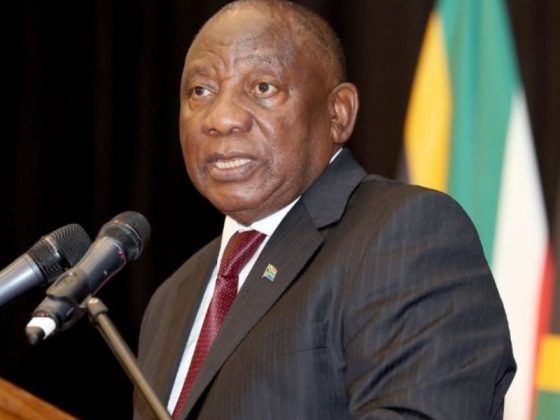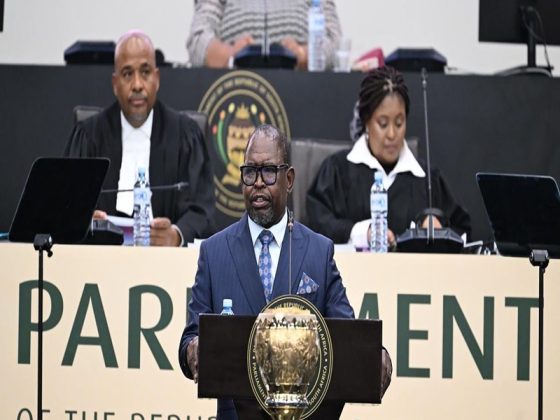
As President Cyril Ramaphosa prepares to deliver the 2026 State of the Nation Address (SONA) at Cape Town City Hall on Thursday, the tension between spectacle and substance will again be unavoidable. The slow reconstruction of the National Assembly building, which was gutted by fire on 2 January 2022, has become more than an infrastructural delay; it is an unintended metaphor for governance itself: progress is deliberate, uneven, and often incomplete. The state continues to operate from borrowed premises, both literally and figuratively.
Yet this year’s address unfolds under more complex conditions than ceremonial continuity suggests. South Africa enters 2026 exhibiting signs of macroeconomic stabilisation while remaining trapped in a low-growth equilibrium. The central policy question is no longer whether the country is collapsing – that narrative has faded – but whether stabilisation can meaningfully transition into renewal.
SANDF pageantry vs operational reality
Few national images are as powerful as the South African National Defence Force (SANDF) marking the opening of Parliament. Their uniforms are immaculate, formations precise, and presence a tangible signal of sovereignty.
Yet the optics mask a harsher reality: operational underfunding, resource scarcity, and low morale plague South Africa’s deployed forces. Reports of soldiers surviving on minimal rations – pap and eggs – during field deployments at the border, reveal the disparity between symbolic authority and material neglect.
This duality underscores a broader governance challenge: the state can project authority, but sustaining those who enact it remains a struggle. Pageantry may inspire confidence, but credibility requires that the material conditions of enforcement and protection match the symbolism.
A fiscal turning point – or merely cyclical relief?
Recent analysis from the Bureau for Economic Research suggests South Africa may be approaching an “important fiscal turning point.” Lower sovereign risk, moderating borrowing costs, improving inflation expectations anchored around the emerging 3% target, and a rare credit-rating upgrade have created an unusually favourable macro backdrop ahead of the February budget.
Commodity prices, particularly gold and platinum, have delivered an unexpected revenue tailwind, expanding fiscal space just as debt approaches politically uncomfortable levels near 80% of GDP.
But the critical analytical distinction is this:
Windfalls are not reform. Fiscal credibility will ultimately depend on whether Treasury uses cyclical revenue to reduce borrowing requirements or to postpone politically difficult expenditure trade-offs. For instance, the 2021-2022 commodity surge provided similar breathing room, yet it was largely absorbed by increased social grants and public sector wage bill, delaying structural adjustments.
The warning from economists is clear: South Africa cannot tax or borrow its way out of structural stagnation. Failure to cut consumption spending, scrutinise departmental baselines, and enforce political discipline would suggest that apparent progress is cosmetic rather than foundational.
Finance Minister Enoch Godongwana reinforced this message in the 2025 Medium-Term Budget Policy Statement, emphasising debt stabilisation, primary surpluses, and expenditure restraint as non-negotiable anchors of macroeconomic credibility. At the World Economic Forum in Davos last month, he went further – signalling to global investors that South Africa’s fiscal strategy is shifting from crisis management toward durability.
Markets heard what they needed to hear.
Whether domestic politics allows Treasury to follow through remains the open question.
SARS – the quiet restoration of state capacity?
Often overlooked in the fiscal debate is the institutional recovery of the South African Revenue Service (SARS). Stronger-than-expected collections – driven by improved compliance, commodity-linked corporate taxes, and rebuilding administrative capability – have helped narrow revenue gaps without resorting immediately to overt tax increases.
This is more than just arithmetic.
Revenue credibility signals a state regaining operational competence – a prerequisite for investor confidence and sovereign trust. Yet SARS cannot indefinitely compensate for weak growth. Over-reliance on cyclical corporate receipts risks reproducing fiscal vulnerability when commodity cycles inevitably turn.
Put differently: administrative recovery buys time; it does not substitute for economic expansion.
The growth paradox – stabilising yet structurally poorer
Despite improving sentiment, South Africa’s per capita GDP is now lower than it was nearly two decades ago – a stark indicator that the average citizen has not meaningfully benefited from democratic-era growth.
Since joining BRICS in 2010, the country has underperformed every major emerging market.
The primary constraints are neither mysterious nor new:
- Energy insecurity
- Labour market rigidity
- Freight and logistics inefficiencies
- Infrastructure decay
Load shedding may have receded, but its long economic shadow persists. Analysts estimate the economy could have been roughly 10% larger had electricity constraints been addressed earlier – another reminder that lost growth compounds permanently.
Encouragingly, reforms to electricity generation and freight rail – alongside private-sector participation – are improving investor sentiment. Goldman Sachs anticipates a busy deal environment, while the SARB projects modest growth acceleration.
Yet “modest” remains the operative word: forecasts still trail global averages.
South Africa is stabilising – but without escape velocity.
Education success, economic absorption failure
Nowhere is the structural contradiction more visible than in education.
The impressive 2025 matric pass rate offers political symbolism and social pride. But the deeper policy question is not how many learners pass – it is how many transition into productive economic pathways.
Universities cannot absorb the growing cohort of graduates. Technical and vocational channels remain underdeveloped. The labour market lacks sufficient dynamism to integrate new entrants.
The result is a dangerous pipeline: educational attainment rising faster than opportunity creation.
This disconnect risks producing not a demographic dividend, but a generation of credentialed yet economically excluded youth – a historically potent driver of political volatility.
For SONA to resonate with younger South Africans, government must articulate a clearer alignment between education outputs, skills policy, industrial strategy, and labour demand.
Without that alignment, educational progress may paradoxically heighten frustration rather than mobility.
Poverty, informality, and the limits of statistical comfort
Headline indicators show incremental improvement: poverty rates have declined from historical peaks, business activity is tentatively recovering, and unemployment, depending on measurement, may be overstated if the informal economy is fully considered.
Indeed, informal activity now accounts for roughly a quarter of GDP, suggesting a labour market more adaptive than official statistics imply.
But resilience should not be mistaken for prosperity.
Youth unemployment remains acute. Informal work is precarious. Food poverty still affects millions.
Children comprise over 40% of the poor; a statistic that should temper any technocratic celebration of macro stabilisation.
The President therefore confronts a messaging dilemma: macro progress that is not experienced at household level risks being perceived as abstraction.
Commodity optimism vs reform discipline
The late-stage commodity upswing presents both opportunity and temptation.
Used wisely, it could accelerate debt reduction and fund growth-enhancing infrastructure. Misused, it could entrench the very fiscal habits that created vulnerability.
History suggests windfalls often weaken reform urgency.
The true test of fiscal leadership is whether government behaves as though the boom is temporary – because it is.
Municipal fragility – the election-year risk
If national government embodies policy ambition, municipalities represent lived governance.
Infrastructure breakdowns, water insecurity, and financial mismanagement continue to erode public confidence. Election-year scrutiny will intensify these pressures, particularly in urban economic hubs.
Cities drive growth. When they falter, national reform loses traction.
The President’s challenge is therefore integrative: linking macro reform to visible local outcomes before voters return to the polls.
Incremental reform meets rising expectations
Operation Vulindlela and related initiatives demonstrate tangible progress – streamlined permits, accelerated approvals, and expanding public-private partnerships.
Yet implementation remains uneven.
Business Leadership South Africa’s reform tracker captures the emerging risk succinctly: intentions are broad; delivery lags.
South Africa may be approaching a political inflection point where incrementalism – once reassuring – begins to feel insufficient.
Citizens measure reform in lived time, not policy cycles.
Crime and the limits of justice reform
Evidence before the Madlanga Commission and Parliament’s Ad Hoc Committee points to entrenched dysfunction: interference, fragmented prosecution, intelligence shortcomings, and declining public confidence. Crime is not just a social or economic problem; it is a governance metric. Insecurity erodes trust, depresses investment, and amplifies political volatility.
Ramaphosa’s reformist narrative faces a stark challenge: credibility in crime prevention requires measurable results. Without demonstrable improvements in policing, prosecution, and judicial independence, incremental reform risks being dismissed as insufficient.
Geopolitics – credibility abroad, constraints at home
South Africa’s multilateral profile has strengthened, aided by the G20 presidency in 2025, Financial Action Task Force (FATF) and EU-UK de-listings and renewed institutional credibility. But relations with the United States remain strained, underscoring the difficulty of balancing strategic autonomy with economic dependence.
Global investors increasingly view South Africa as a reform story, but one still vulnerable to domestic political friction.
International approval cannot substitute for domestic execution.
Back to Cape Town City Hall and the SONA
Cape Town City Hall reflects both continuity and limitation. Temporary facilities, slow reconstruction, and elusive accountability highlight the state’s dependence on borrowed authority. Ceremonial displays, including the SANDF opening, communicate order but mask operational neglect and systemic dysfunction.
SONA 2026 must balance aspiration with reality: citizens and markets will assess not just symbolic competence, but whether governance delivers tangible outcomes.
Where the President must speak with precision
For SONA 2026 to transcend ceremonial reassurance, it must confront several strategic truths:
- Fiscal stabilisation must translate into growth.
- Education gains must align with labour absorption.
- Commodity windfalls must fund resilience, not consumption.
- Municipal performance must improve visibly.
- Crime reduction must become measurable.
- Reform speed must match societal impatience.
- Trade diversification must accelerate to cushion external pressures.
Without these shifts, stabilisation risks becoming a ceiling rather than a foundation.
As a final thought
History rarely forgives leaders who manage decline competently but fail to ignite renewal. Ramaphosa’s task is not merely to recount progress, but to demonstrate that stabilisation is a springboard, not a destination. The credibility of SONA 2026 hinges on bridging aspiration and lived reality, symbolism and service, promise and delivery.
In an election year, stakes are high. Fiscal prudence, FATF delisting, and macroeconomic stabilisation matter – but only if they translate into safer streets, better services, tangible opportunity, and resilient trade positioning amid global uncertainties.
SONA 2026 will reveal not only the condition of the Republic, but the plausibility of its governance and the depth of its ambition. South Africa’s story is no longer one of collapse; it is one of choices. Whether those choices yield transformation or manage stagnation is the question that will define both the speech and the President.