Beyond the Crisis Narrative: Why South Africa Remains a Functional Democracy and Strategic Investment Partner
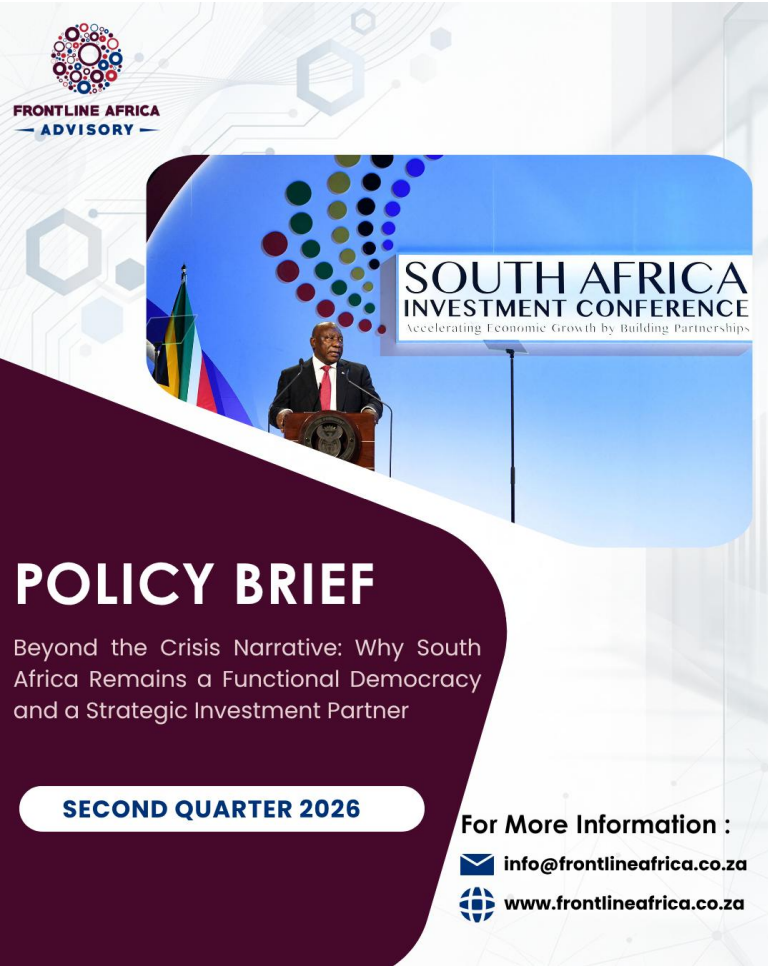
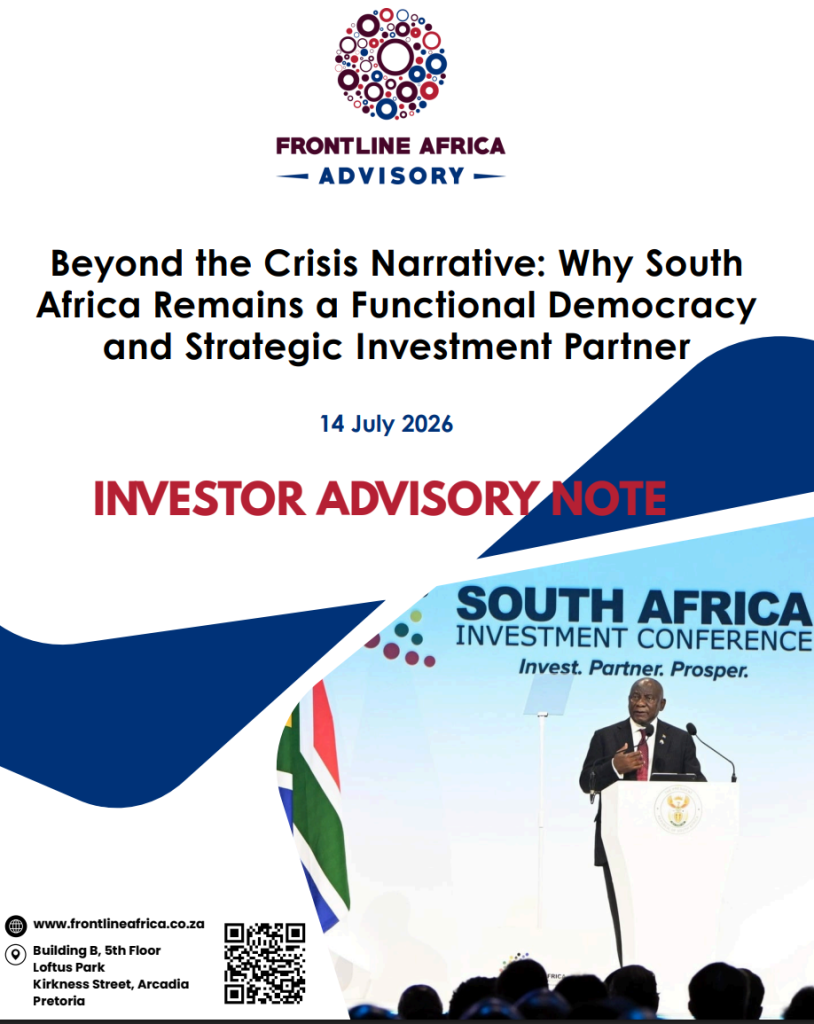
This policy brief challenges the dominant narrative that South Africa is a country in democratic decline and an increasingly unattractive investment destination. While acknowledging the country’s serious governance, fiscal and socio-economic challenges – including corruption, weak service delivery, political contestation and sluggish economic mgrowth – it argues that these should not be mistaken for democratic failure. Instead, the brief contends that South Africa’s constitutional institutions continue to function effectively by constraining public power, ensuring accountability, facilitating peaceful political competition and providing the institutional certainty required for long-term investment. It encourages investors to assess the country’s resilience through the strength of its democratic institutions rather than through short-term political headlines.
Beyond the Crisis Narrative: Why South Africa Remains a Functional Democracy and Strategic Investment Partner
South Africa is not a collapsing democracy. It is a complex emerging market with serious governance and state-capacity challenges, but also with durable constitutional institutions, active political competition,
credible checks and balances, a strong civil society and meaningful reform momentum.
The investment case is not risk-free; it is resilience-based. South Africa’s risks are real, but they sit within a constitutional system that continues to expose wrongdoing, absorb political change, protect institutional independence and create channels for reform.
The Vaal SEZ and the Limits of Reindustrialisation: The Structural Test of South Africa’s Industrial Policy
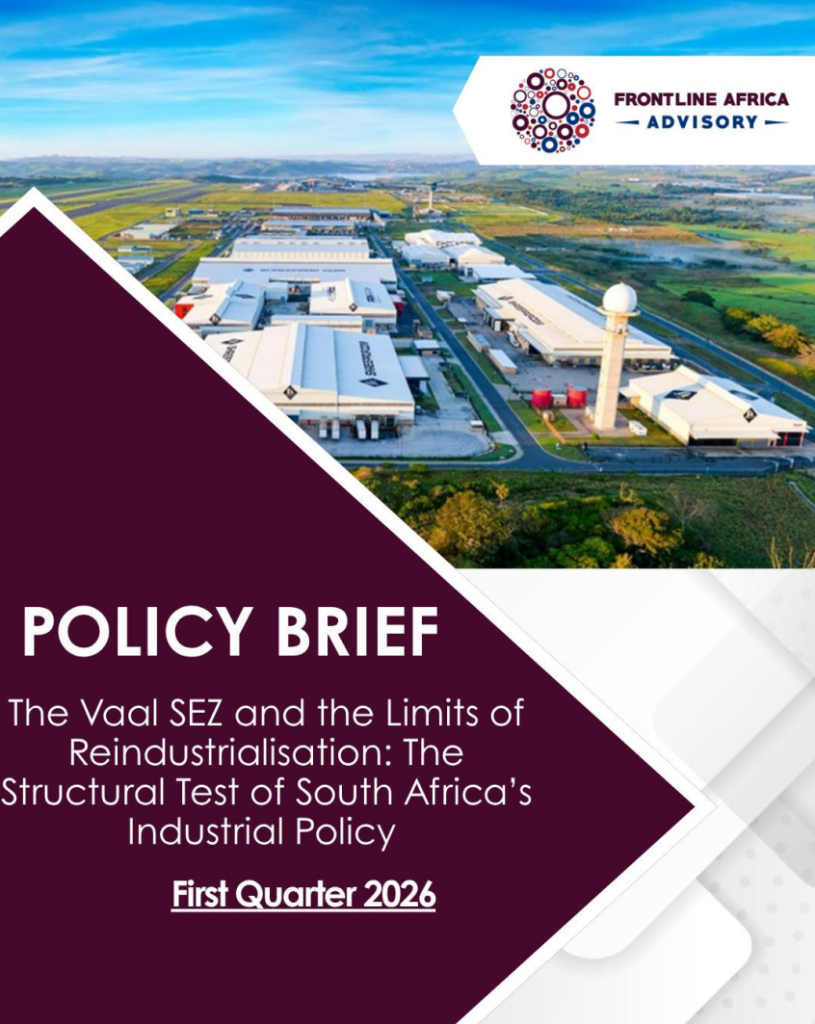
The Vaal Special Economic Zone (SEZ) has transitioned from policy proposal to formal legal designation under Government Notice No. 7186 of March 2026, establishing a defined industrial geography across Sedibeng. This development embeds the SEZ within South Africa’s industrial policy architecture under the leadership of Parks Tau, signalling a renewed state-led effort to drive regional reindustrialisation. As articulated by Zuko Godlimpi, the initiative is intended to restore manufacturing capacity and revitalise an economy shaped by prolonged industrial decline.
Despite this institutional progress, the SEZ’s prospects are constrained by entrenched structural challenges, including weakening municipal capacity, infrastructure instability, illicit economic activity, and fragmented governance. The Vaal SEZ thus represents more than an investment promotion instrument; it serves as a critical test of South Africa’s ability to operationalise industrial policy and reverse systemic deindustrialisation under conditions of institutional strain.