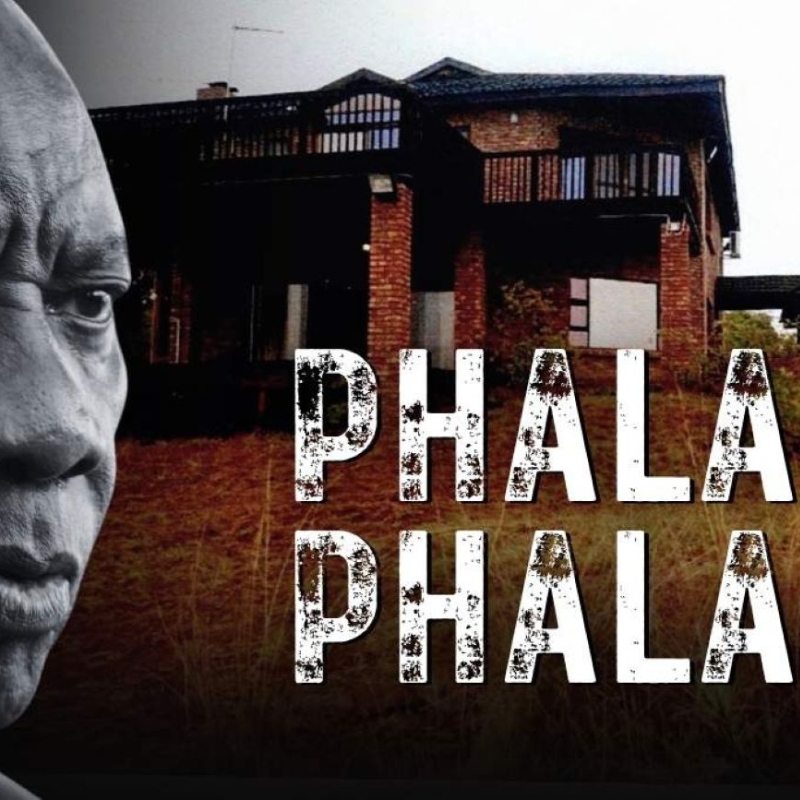
In a landmark majority judgment delivered on 8 May 2026, the Constitutional Court declared Rule 129I of the National Assembly Rules unconstitutional, struck it down, and immediately rewrote it through severance and reading-in. The Court set aside Parliament’s 13 December 2022 vote against the adoption of the retired Chief Justice Sandile Ngcobo led Phala Phala Independent Panel Report and ordered that the report be referred directly to the Section 89 Impeachment Committee.-
The practical effect is unmistakable: the procedural shield that protected President Cyril Ramaphosa for more than three years has been dismantled. The impeachment enquiry is no longer hypothetical or politically avoidable. It is now constitutionally unavoidable.
Yet the political response from both the President and the ANC demonstrates that the party has already shifted into full defensive consolidation mode.
Earlier this week, Ramaphosa addressed the nation directly, making clear that he will not resign. Instead, he confirmed that he would seek judicial review of the December 2022 Independent Panel Report, arguing that aspects of the process and findings remain contestable. The decision signals that the President has formally chosen institutional resistance and legal contestation over political retreat.
Simultaneously, Parliament has already approved the establishment of a 31-member Section 89 impeachment committee following agreement among Parliamentary parties. The committee composition reflects the balance of forces inside the National Assembly:
- ANC: 9 members
- Democratic Alliance (DA): 5 members
- uMkhonto weSizwe Party (MKP): 3 members
- Economic Freedom Fighters: 2
- Remaining 12 seats distributed among other parties
The Good Party and the Pan-African Congress (PAC), who have their sole members serving as Cabinet ministers, abstained.
The speed with which the committee has been constituted illustrates that the Constitutional Court ruling has moved the process beyond theoretical debate and into operational Parliamentary politics.
At the same time, the ANC itself has visibly closed ranks around Ramaphosa. The party’s Special National Executive Committee (NEC) has already met to formulate a collective political response to the judgment and the impeachment process. Following the NEC meeting, ANC top leaders briefed the party’s 159-member Parliamentary caucus to align MPs behind the official party position. The message emerging from both the NEC and caucus engagements is unambiguous: the ANC is digging in to protect Ramaphosa.
ANC Secretary General Fikile Mbalula’s remarks to the caucus reflected the party’s confidence that the President can survive the process politically, even if the inquiry proceeds constitutionally. He emphasised both the numerical hurdle required for impeachment and the ANC’s ongoing engagement with Government of National Unity (GNU) partners.
This distinction has become increasingly important because the African Transformation Movement (ATM) and the uMkhonto weSizwe Party (MKP) have also filed for motions of no confidence against Ramaphosa. Unlike a Section 89 impeachment process, which requires a two-thirds majority in the National Assembly to remove a President, a motion of no confidence under Section 102 requires only a simple majority of 50% plus one.
In procedural terms, this potentially creates a more immediate Parliamentary threat than impeachment itself.
However, the ANC leadership appears confident that its caucus discipline, combined with support or abstention from key GNU partners, would allow Ramaphosa to survive such a vote.
The emergence of parallel Parliamentary tracks – impeachment on one side and a possible no-confidence process on the other – significantly escalates the pressure environment around the Presidency. It means Ramaphosa is no longer facing only a long-form constitutional accountability inquiry; he is also confronting the possibility of a politically charged Parliamentary legitimacy battle.
This marks a turning point not only for Ramaphosa personally, but for the ANC, the GNU, and the balance of political power heading into the 2026 local government elections and the ANC’s decisive 2027 elective conference.
The return of presidential vulnerability
South African political history demonstrates a clear pattern: presidents often become politically weakest midway through their second term, precisely when succession politics begin consolidating around future contenders.
Thabo Mbeki’s fall provides the first modern precedent. Although he remained State President after the 2007 Polokwane Conference, the September 2008 Pietermaritzburg High Court judgment by Judge Chris Nicholson – suggesting political interference in Jacob Zuma’s prosecution – handed Mbeki’s opponents within the ANC the ammunition they needed to act against him. The judgment transformed existing factional dissatisfaction into a legitimacy crisis. Within days, the ANC recalled Mbeki from office, and he fell on his sword.
Jacob Zuma’s trajectory followed a similar logic, albeit over a longer period. Zuma survived repeated motions of no confidence in Parliament, sustained corruption allegations, and mounting public outrage while he remained politically useful to the ANC’s internal balance of power. However, once Ramaphosa defeated Nkosazana Dlamini-Zuma at the ANC’s December 2017 elective conference, Zuma’s position deteriorated rapidly. The corruption cloud that had long surrounded him suddenly became intolerable because the party had already begun reorganising itself around a post-Zuma future. By February 2018, he too was recalled.
Ramaphosa now appears to be entering the same danger zone.
The Constitutional Court judgment may become the catalytic event that transforms latent dissatisfaction into organised political vulnerability inside the ANC. The President is now halfway through his final term. Succession calculations are already underway ahead of the ANC’s December 2027 elective conference, where Ramaphosa will hand over the party leadership baton.
However, the immediate political response from the ANC suggests that the party is not yet prepared to abandon him. Instead, the organisation appears to have reached a temporary strategic consensus that Ramaphosa remains essential for short-term institutional stability, GNU management, and electoral containment ahead of the 2026 municipal elections.
That distinction matters enormously.
The ANC is not defending Ramaphosa because the party is necessarily unified around him ideologically. Rather, it is defending him because the risks associated with destabilising the Presidency now may outweigh the risks associated with carrying his political baggage into the next electoral cycle.
This reflects a classic governing-party survival calculation.
An ANC at its weakest point since 1994
This crisis emerges at a moment of unprecedented weakness for the ANC.
The party fell below 40% nationally in the 2024 general election for the first time in democratic history, forcing it into a coalition government with the DA and other smaller parties. Polling trends since then suggest that the ANC’s electoral decline is not cyclical but structural, with support continuing to fragment across both urban and rural constituencies.
This matters because weakened governing parties become less capable of insulating leaders from accountability crises. In previous eras, ANC Parliamentary dominance could suppress internal dissent and absorb reputational shocks. That era is over.
Yet paradoxically, the ANC’s weakness may also explain why the party is rallying behind Ramaphosa so aggressively.
A leadership crisis now would unfold under conditions of coalition dependence, declining electoral legitimacy, fiscal pressure, and succession uncertainty. Unlike in the Mbeki and Zuma eras – when the ANC still possessed overwhelming Parliamentary dominance – the party today lacks the institutional margin to absorb a destabilising internal rupture.
The Phala Phala impeachment process therefore arrives at the precise moment the ANC is least politically capable of managing leadership fragmentation.
The party must now simultaneously defend its sitting President, preserve GNU stability, contain succession battles, prepare for the 2026 municipal elections, and avoid further electoral erosion before 2029.
Those pressures are not necessarily compatible.
The ANC’s defensive consolidation strategy
The most important development since the Constitutional Court judgment is not merely the establishment of the impeachment committee itself, but the speed with which the ANC machinery has mobilised to politically contain the fallout.
The Special NEC meeting and subsequent caucus briefing reveal a party attempting to prevent the emergence of visible internal fractures at an early stage.
This matters because ANC leadership crises historically become fatal when factional uncertainty becomes public.
The current strategy appears to involve five interconnected objectives:
- Maintaining caucus discipline
- Reassure GNU partners,
- Framing impeachment as constitutionally manageable rather than existential
- Preventing succession mobilisation from accelerating prematurely, and
- Buying political time through litigation and procedural contestation.
In this respect, Ramaphosa’s decision to take the 2022 Independent Panel Report under judicial review is politically significant beyond its legal merits.
The litigation route potentially serves several strategic functions simultaneously:
- Slowing Parliamentary momentum
- Reframing the process as legally contested rather than politically conclusive
- Preventing the impeachment inquiry from dominating the 2026 local government election environment
- Allowing the ANC to maintain organisational cohesion while succession calculations continue behind the scenes.
The Presidency’s position therefore appears increasingly aligned with a broader ANC institutional strategy: survive the process politically even if the process itself cannot be stopped constitutionally.
Parliament’s weakness exposed again
The Constitutional Court judgment also represents another major rebuke of Parliament itself.
For the second time in recent years, the judiciary has effectively compelled the National Assembly to perform its constitutional oversight functions. The Court eliminated the Parliamentary “blocking mechanism” that previously allowed a governing majority to bury an Independent Panel report before a full impeachment enquiry could proceed.
Institutionally, this strengthens constitutional accountability. Politically, however, it exposes a deeper structural weakness in South Africa’s democratic architecture: Parliament repeatedly requires judicial intervention before acting against executive power.
The irony is now particularly striking.
Even as Parliament proceeds with establishing the impeachment committee, the political reality remains that the same Parliamentary arithmetic that previously shielded Ramaphosa is still largely intact.
The ANC’s 159-member caucus remains central to the outcome. The constitutional process may now be unavoidable, but successful removal remains politically improbable unless significant internal ANC fragmentation emerges.
The judiciary has therefore forced accountability procedures forward, but it cannot force political will.
The GNU’s calculations are quietly changing
Recent political signalling from the Democratic Alliance (DA) has further reinforced the extent to which sections of both the political and business establishment increasingly view Ramaphosa as a stabilising necessity, even amid the impeachment crisis.
DA Federal Leader and Cape Town Mayor Geordin Hill-Lewis recently revealed that business leaders – including figures aligned with or connected to the ANC – have privately approached the DA urging the party to defend Ramaphosa politically. The underlying message, according to Hill-Lewis, is that removing Ramaphosa would trigger a broader national crisis.
This is a remarkably important development because it reveals that Phala Phala is no longer being assessed solely through a legal or ethical lens. Increasingly, elite political and economic actors are evaluating the crisis through the framework of systemic stability.
For important sections of business, financial markets, and reform-oriented coalition actors, Ramaphosa is still perceived as the central political anchor preventing deeper state instability, accelerated coalition fragmentation, investor panic, or a disorderly ANC succession battle.
That perception does not necessarily reflect confidence in Ramaphosa personally. Rather, it reflects anxiety about the absence of a clear and credible post-Ramaphosa political settlement.
In effect, sections of the political economy now appear to fear the uncertainty that could follow Ramaphosa more than the ongoing political damage associated with defending him.
This significantly alters the strategic environment around the impeachment process.
The ruling also fundamentally alters calculations inside the GNU.
Publicly, GNU partners are likely to continue emphasising constitutionalism, due process, and stability. Privately, however, parties such as the DA are almost certainly beginning to think beyond the Ramaphosa era.
At present, however, the ANC appears confident that GNU partners will not support an outcome that destabilises the coalition arrangement itself.
Mbalula’s remarks strongly implied ongoing engagement between the ANC and GNU partners regarding the impeachment process. This reflects a broader reality: for many GNU actors, preserving short-term state stability may currently outweigh the political incentives associated with escalating the crisis.
The President is now halfway through his final term, and the ANC’s next leadership contest is less than two years away. For GNU partners, this creates both risk and opportunity.
On one hand, destabilising Ramaphosa too aggressively could threaten the GNU itself and trigger market instability. On the other hand, GNU partners may increasingly see strategic value in influencing the ANC’s succession trajectory toward a less politically compromised post-Ramaphosa leadership.
In effect, some within the GNU may quietly calculate that Ramaphosa remains useful for short-term stability, but a post-Ramaphosa ANC leadership transition is inevitable, and future GNU arrangements may depend on who succeeds him.
That introduces an entirely new layer of political complexity to the impeachment process.
The DA, in particular, now faces a delicate balancing act: support constitutional accountability without collapsing the GNU, preserve reform momentum without becoming politically tied to Ramaphosa’s vulnerabilities, and potentially shape conditions for a future coalition relationship with a reconfigured ANC leadership.
The SACP revolt and alliance fragmentation
Compounding the pressure is growing instability within the ANC-led Tripartite Alliance itself.
The South African Communist Party (SACP), already preparing to contest the upcoming local elections independently from the ANC, has become increasingly hostile toward Ramaphosa’s economic programme and the influence of business interests within the Presidency.
For sections of the SACP, Phala Phala is no longer viewed simply as a misconduct issue. It has become symbolic of a broader ideological accusation: that Ramaphosa presided over a technocratic version of state capture in which politically connected business interests, operating through reform programmes such as Operation Vulindlela, benefited from the restructuring and partial privatisation of state-owned entities.
Within this framing, the SACP increasingly portrays Operation Vulindlela, infrastructure liberalisation, energy market reforms, and logistics restructuring, not as governance reform, but as elite-managed redistribution of state assets toward private capital.
This explains why elements within the alliance are demanding that the impeachment process be fast-tracked. For Ramaphosa’s critics inside the broader liberation movement, the issue is no longer only Phala Phala itself; it is the opportunity to politically delegitimise the entire reform project associated with his presidency.
The significance of this should not be underestimated. The ANC’s alliance architecture has historically served as an internal stabilising mechanism. If alliance fragmentation accelerates during the impeachment process, Ramaphosa could find himself politically isolated from both ideological and organisational flanks simultaneously.
Ramaphosa’s strategic dilemma has narrowed
Against this backdrop, Ramaphosa’s strategic options have narrowed significantly.
Full cooperation
The President could fully participate in the Section 89 process, testify publicly, and defend the merits of his conduct.
This would align with his long-standing constitutionalist image and project confidence in institutional accountability. Yet the political cost would be enormous. Months of televised hearings, document disclosure, and adversarial testimony would dominate the national agenda and risk turning the impeachment enquiry into a rolling referendum on Ramaphosa’s credibility.
At a moment of ANC fragility, such exposure could accelerate factional repositioning inside the party.
Litigation and delay
This now appears to be the Presidency’s preferred route.
Ramaphosa has already signalled that he will take the December 2022 Independent Panel Report under judicial review rather than resign.
A fresh court challenge, coupled with urgent applications to suspend Parliamentary proceedings, could buy valuable political time. Even if courts ultimately refuse to halt a Constitutional Court-directed Parliamentary process, litigation itself could slow momentum and allow Ramaphosa space to consolidate support ahead of the ANC’s succession battles.
The danger, however, is reputational. Delay may increasingly appear not strategic, but evasive.
Exit before escalation
At present, this appears politically unlikely.
Ramaphosa’s national address and the ANC’s subsequent mobilisation indicate that neither the Presidency nor the governing party currently believes resignation is necessary or strategically desirable.
Nevertheless, resignation remains the cleanest constitutional exit.
Once no longer President, the Section 89 process effectively becomes moot. Such a move could spare the ANC the spectacle consequence navigation if they voted in favour of a removal vote.
But politically, the consequences would be seismic. A resignation would likely trigger:
- An ANC succession crisis
- Intense GNU instability
- Market uncertainty; and
- A public perception that the governing party had once again failed the constitutional accountability test.
For a party already below 40%, the symbolic damage could be devastating ahead of the 2026 local elections.
The real risk is no longer legal. It is political
The central question is no longer whether Ramaphosa can survive legally. The Constitutional Court has already ensured the process will proceed.
Nor is the immediate question whether the ANC intends to defend him. It clearly does.
The real question is whether the ANC can sustain that defensive unity as the impeachment process intensifies, succession politics deepen, alliance fragmentation accelerates, and electoral pressures mount.
That is where the greatest danger now lies.
Phala Phala is no longer merely a scandal about undeclared foreign currency hidden on a private farm. It has evolved into a convergence point for ANC succession politics, Alliance fragmentation, GNU recalibration, ideological contestation over economic reform, and broader public fatigue with governing party accountability failures.
The President has lost his last procedural shield. What remains is a volatile political contest over whether the ANC can continue insulating Ramaphosa politically while simultaneously managing its own internal succession transition and coalition vulnerabilities.
The historical pattern is sobering. Mbeki fell when the party decided he had become politically costly. Zuma fell when the party reorganised around a successor.
Ramaphosa now enters the same succession window under conditions of far greater electoral weakness, coalition dependence, and institutional fragmentation than either of his predecessors faced.
For now, the ANC is clearly digging in behind him.
But South African political history suggests that presidential survival inside the ANC is rarely determined by legal arguments alone. It is determined by whether the party still believes the political costs of defending its leader remain lower than the costs of replacing him.
That calculation, not the legal merits of Phala Phala itself, will ultimately determine whether Ramaphosa survives the impeachment era politically.