Introduction
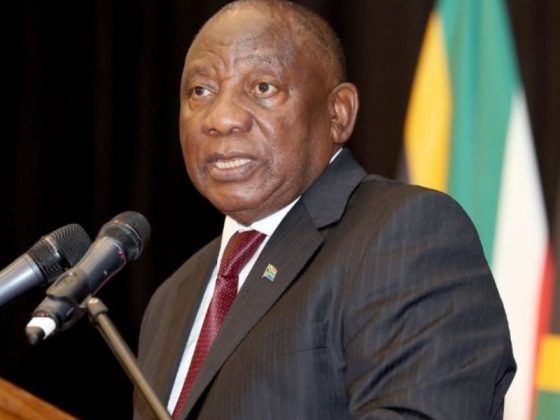
In his 2026 State of the Nation Address, President Cyril Ramaphosa announced the National Illicit Economy Disruption Programme, a coordinated effort to combat illicit trade through collaboration between government and the private sector. The programme will utilise data analytics and artificial intelligence (AI) to target high-risk sectors, namely alcohol, counterfeit goods, fuel, and tobacco. Its establishment formally acknowledges the illicit economy as a national threat that undermines jobs, public safety, and state revenue.
The Programme reflects a shift toward intelligence-driven enforcement. By emphasising inter-agency coordination and technology-enabled investigations, it reframes illicit trade as organised economic crime rather than isolated regulatory breaches. This approach aligns with global best practice, as promoted by the Organisation for Economic Co-operation and Development (OECD). This is a welcome announcement, demonstrating political will to address a problem that many industries have been calling on the government to tackle earnestly for the sake of legal industries.
The Cost of Illicit Trade to the Economy
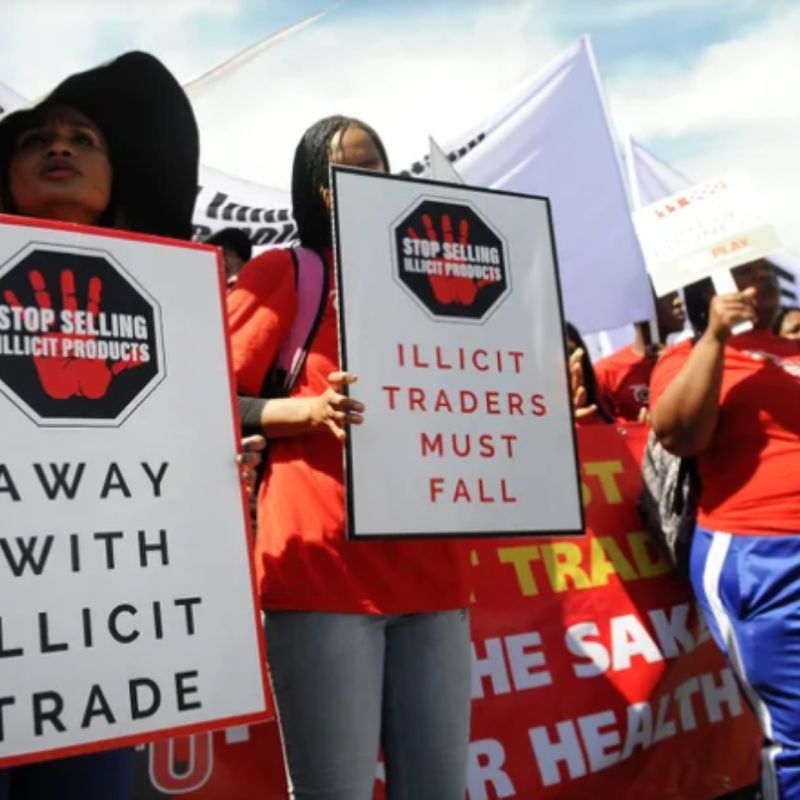
Illicit trade has cost the South African economy billions of rands over the years. The Transnational Alliance to Combat Illicit Trade (TRACIT), in collaboration with Business Unity South Africa (BUSA) released a report in 2025 titled , which estimates that illicit trade costs South Africa around R100 billion annually, equivalent to roughly 10% of GDP, through lost tax revenues, displaced legitimate businesses, and undermined governance. Illicit tobacco and alcohol alone drain nearly R30 billion yearly in forgone revenue, with the tobacco illicit market share reaching up to 70% in recent years and causing over R18 billion in annual tax losses.
Multi-Stakeholder Collaboration is Critical
Beyond revenue loss, illicit trade distorts competition, discourages investment, and weakens regulatory credibility. For the programme to be effective, the government has to pull in the private sector’s expertise and capacity in a similar manner as Operation Vulindlela, which has recorded great strides in addressing the impediments to South Africa’s economic growth. The government should also lean on initiatives by the private sector to tackle illicit trade and not seek to reinvent the wheel. For instance, the Consumer Goods Council of South Africa (CGCSA) in December 2025, launched the Illicit Economy Task Force to support law enforcement agencies such as the South African Police Service (SAPS), South African Revenue Service (SARS), and National Prosecuting Authority (NPA) by providing technical expertise and intelligence sharing channels to successfully prosecute illicit traders.
Better Late Than Never: However, Decisive Action Will Be Key
Most importantly, the success of the Programme will depend on institutional clarity, defined operational mechanisms and structured stakeholder inclusion. Political intent alone will not deliver impact without clear governance and accountability frameworks. This is due to a credibility gap where previous government commitments have not translated into tangible actions. Thus, the government will be judged not by intent but by visible enforcement outcomes and prosecutions.
Achieving tangible results will require addressing persistent weaknesses in governance, coordination, and institutional capacity. Thus, beyond the Programme, the government will also need to develop a robust regulatory framework to enable the fight against illicit trade.
Conclusion
Overall, the recognition of illicit trade as a national priority is a significant step. To ensure lasting impact, the programme should explicitly integrate existing industry task forces, intelligence systems, and partnerships into a unified national platform, rather than creating new, overlapping structures. This integration is the clearest path to delivering meaningful results.