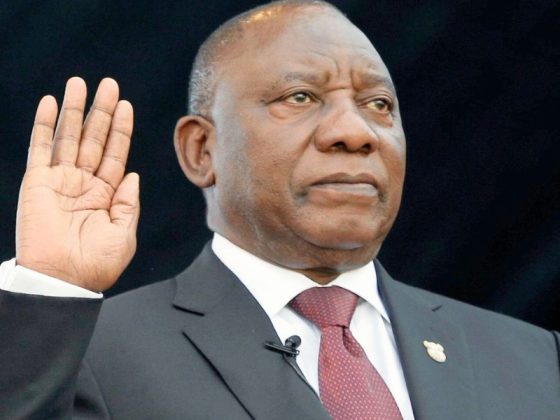
When President Cyril Ramaphosa announced 4 November 2026 as the date for South Africa’s next Local Government Elections, it did more than set a timetable. It effectively started a countdown to what may be the most operationally consequential political event since 1994; not because of who wins nationally, but because of what happens inside municipalities the day after.
If the 2024 national election marked the symbolic end of single-party dominance, the 2026 local elections will determine whether South Africa can function under what replaces it. This is where politics becomes infrastructure and maintenance: water flows or it does not; electricity is distributed or it is not; permits are issued or delayed indefinitely. For business, this is not political theatre; it is a balance sheet reality.
The data already points to a system under strain. The African National Congress’ long electoral decline is no longer theoretical; it is measurable, sustained, and accelerating. Trend-based projections suggest the party could fall below 30% in the 2026 cycle, not replaced by a dominant alternative but by a fragmented field of competitors. The Democratic Alliance shows resilience but not dominance. Smaller parties are no longer peripheral; they are decisive.
The result is clear: coalition governments will not be the exception; they will be the system. And in South Africa’s current institutional design, that system produces instability. With over 500 registered parties, weak enforcement of coalition agreements, and no meaningful barriers to micro-party leverage, governance in hung councils is structurally predisposed toward volatility. What we are heading to is not just a competitive election; it is a stress test of whether fragmented democracy can deliver basic services.
Nowhere is this more consequential than in the metros. Johannesburg, Tshwane, and Ekurhuleni are not just political prizes; they are economic engines. Yet they are already operating under conditions that would be untenable in most emerging markets. Johannesburg’s water crisis is not an isolated failure; it is a case study in systemic dysfunction.
The city collected nearly R12 billion in water revenue but invested just over R1 billion in infrastructure. Across the country, 63% of municipalities are in financial distress, municipal debt has exceeded R130 billion, and infrastructure backlogs, particularly in water and sanitation, run into the hundreds of billions. These are not abstract figures; they translate directly into outages, delays, and rising costs for firms. When municipalities fail, businesses pay twice: once through taxes and again through self-provision.
This picture is reinforced by the latest findings from the Auditor-General of South Africa, which continue to highlight systemic weaknesses in municipal governance. Fewer than one in five municipalities achieve clean audits, while the majority are plagued by material irregularities, weak financial controls, and widespread unauthorised, irregular, fruitless, and wasteful expenditure. The audit outcomes point to a deeper institutional problem: accountability mechanisms exist on paper but are inconsistently enforced in practice. For business, these findings are not technical; they are predictive indicators of service delivery risk, infrastructure failure, and rising compliance and operating costs at local level.
At a national level, there are signs – however modest – of reform traction. The Business Leadership South Africa (BLSA) Reform Tracker points to incremental progress in areas such as energy reform, logistics stabilisation, and elements of Operation Vulindlela II. But the contrast with local government is stark. Reform momentum weakens significantly at municipal level, where institutional capacity, governance fragmentation, and fiscal distress blunt implementation. This divergence matters: national reform may improve the macro trajectory, but it is municipalities that determine whether businesses can operate day-to-day. In that sense, business has a direct and unavoidable stake in local political outcomes.
Coalition politics, in theory, should introduce accountability. In practice, South Africa’s experience suggests the opposite. Multi-party governments have too often resulted in policy paralysis, leadership churn, and procurement instability. Johannesburg has had nine mayors in less than a decade. Ekurhuleni has cycled through multiple governing arrangements since 2016. These are not political inconveniences; they are operational risks. Coalition agreements are frequently negotiated less around coherent service delivery programmes and more around the allocation of positions, control of budgets, and short-term political leverage. The result is governance that is reactive, transactional, and often disconnected from the long-term infrastructure planning municipalities require.
Yet within this risk lies a more nuanced reality. The divergence between well-governed and poorly governed municipalities is widening. In the Western Cape, where single-party governance has enabled administrative continuity, service delivery outcomes are measurably stronger and business confidence materially higher. This contrast is not ideological; it is institutional. It demonstrates that functionality is possible within South Africa’s system, but it is not guaranteed and remains uneven. The implication for investors is clear: South Africa is no longer a single operating environment. It is a patchwork of governance conditions, each requiring its own risk calculus.
The legislative response to coalition instability, most notably the proposed Coalition Bill, acknowledges the problem but is unlikely to resolve it in the short term. Formalising agreements does not guarantee compliance, and introducing thresholds for representation, while potentially reducing fragmentation, risks excluding legitimate local voices without ensuring stability. The core issue remains structural: a proportional representation system with low barriers to entry and weak party discipline incentivises fragmentation. Until that architecture is addressed, instability will persist.
For business leaders, the strategic implication is unavoidable. The 2026 elections are not just about political outcomes; they are about operational exposure. Companies that continue to treat local government as a secondary consideration will find themselves increasingly vulnerable to service disruptions, regulatory inconsistency, and cost escalation. The more sophisticated approach is already emerging: municipality-level risk mapping, investment in self-sufficiency (water, energy, security), and direct engagement with political actors ahead of the election cycle. The first 90 days after the election – when coalitions are formed and power is allocated – will be as important as the vote itself.
There is, however, a final point often overlooked in the prevailing pessimism. South Africa has navigated institutional transitions before, often under far more acute pressure. What distinguishes the current moment is not the presence of risk, but the diffusion of power. The post-2026 landscape will be messier, more contested, and less predictable; but it will also be more open. For agile businesses, investors, and policymakers, this fragmentation of political authority creates entry points and leverage that did not exist under single-party dominance.
The question, then, is not whether the 2026 Local Government Elections will change South Africa – they will. The real question is whether businesses, investors, and policymakers are prepared for the version of South Africa that emerges on 5 November.