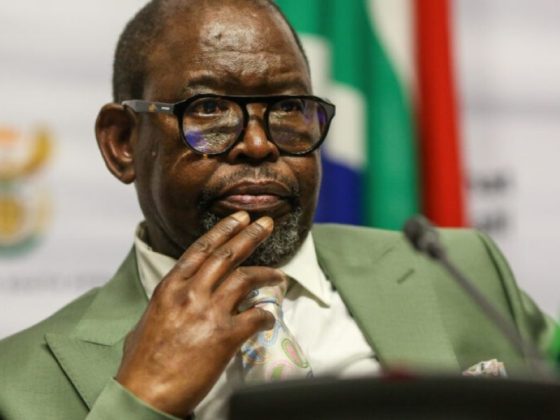
Nearly two years after the formation of the Government of National Unity (GNU), the coalition has, against many predictions, found its feet, delivering the macro-stability South African business needs for investment planning and confidence. Finance Minister Enoch Godongwana’s 26 February budget was tabled on time and without the parliamentary drama witnessed with the twice delayed 2025 budget tabling. The budget received overwhelming support from the GNU partners, suggesting more coherence and synergy. The same synergy was also evident from the Cabinet Lekgotla through to President Cyril Ramaphosa’s State of the Nation Address a few weeks before the budget was tabled.
The November 2025 leaders’ retreat was the decisive turning point. There, the parties reiterated the standing of the GNU Clearing House Mechanism as a platform for regular consultation, consensus-seeking, and dispute resolution. Coherence has extended even to a historically divisive terrain. On the National Health Insurance (NHI), long a flashpoint, President Ramaphosa suspended its implementation pending court finalisation, with the matter now before the Constitutional Court. Disagreement persists, but the process shows a maturing capacity for institutional middle-ground resolution. B-BBEE policy remains fragmented, with ongoing ideological positioning that unsettle business certainty; yet a pragmatic way forward remains visible after the ANC showed willingness to review and improve parts of B-BBEE.
Stability at National Level, less so at Local Level
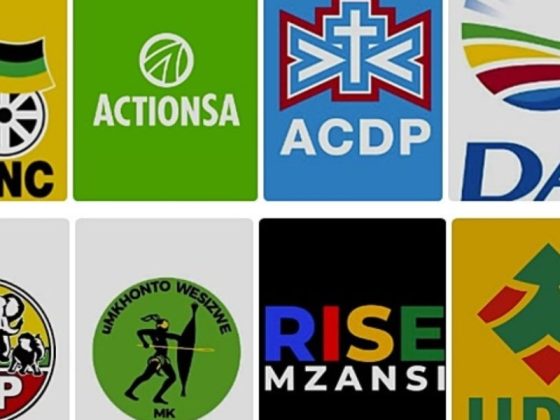
While there is less fragmentation at national government, the same cannot be said of the metros, especially in Gauteng. This is a classic “stable centre, chaotic periphery” dynamic, and it is structural. At national level, existential threats (sovereign risk, credit ratings, global markets) forced political maturity. Local government lacks that pressure. Smaller parties often grandstand without sinking the ship, as seen with the constant threats by the minority governing parties to exit the African National Congress (ANC)-led coalition government in the municipality whenever they are unhappy. With the 2026 Local Government Elections (November 2026–February 2027) on the horizon, it provides further incentive for disruption over delivery.
There is also intense horse trading that leads to compromises for the sake of keeping coalitions together. In Tshwane, a deputy mayor position was created first for ActionSA to occupy and now that position is occupied by the ANC. This was a compromise that went against the ANC’s resolution to occupy mayoral positions in metros which they have more seats. The executive mayor of Ekurhuleni, Doctor Xhakaza, recently revealed that he wanted the Economic Freedom Fighters (EFF) out of the metro’s government but the ANC in the Province barred from doing so, to ensure the stability of the Gauteng government. The province is governed as a minority administration by the ANC’s Panyaza Lesufi. Lesufi’s government remains under the constant threats of votes of no confidence and threats to oppose the provincial budgets.
These few examples are not isolated anecdotes. They are structural. Gauteng contributes approximately 33 % of national GDP. When its metros are paralysed, the entire country’s economic recovery is held hostage. Investors do not distinguish between a stable national budget and collapsing municipal water systems or threatened power cuts; they see one country where the cost of business doing keeps rising (private generators, boreholes, security, broken supply chains).
This is why the shift in fragmentation matters profoundly for business. GNU’s success at national level is necessary for macro-stability, credit ratings and international credibility. But it is insufficient for lived operational reality. Service delivery, infrastructure maintenance, local economic development and day-to-day enforcement all occur at provincial and municipal levels. A coherent national government that presides over dysfunctional cities is ultimately a government that fails its economy. Public trust erodes. Voter disillusionment grows and the very parties in the GNU become vulnerable to backlash when residents, and businesses, blame “the coalition” for local collapse.
The countdown to the 2026 Local Government Elections
The upcoming elections makes the danger more acute. Campaign mode is already underway. Parties now have a powerful incentive to weaponise local instability for electoral gain – not a genuine effort to resolve it. The national Clearing House Mechanism logic that saved the GNU is nowhere to be seen in the metros.
The DA’s April 2026 elective Federal Congress will not test the GNU, if Geordin Hill-Lewis succeeds John Steenhuisen as Federal Leader, as he has already signalled continuity at national level. The far harder test is whether the same parties can export the national formula, structured consultation, consensus mechanisms, and the shared understanding that collapse is not an option, to Gauteng province and its metros before the LGE campaign turns fragmentation into open electoral warfare.
South Africa has proven it can produce a functional multi-party national government under pressure. The next frontier is proving it can do the same were governance touches people’s lives and business operations. Until that gap closes, the GNU’s national coherence will remain a partial victory, impressive in Pretoria, but hollow (and costly) in the streets, factories and boardrooms of Ekurhuleni, Tshwane, and Johannesburg. The battle for South Africa’s future has shifted from national survival to local functionality. For the business community, that is no longer a political story. It is an operational and investment risk.