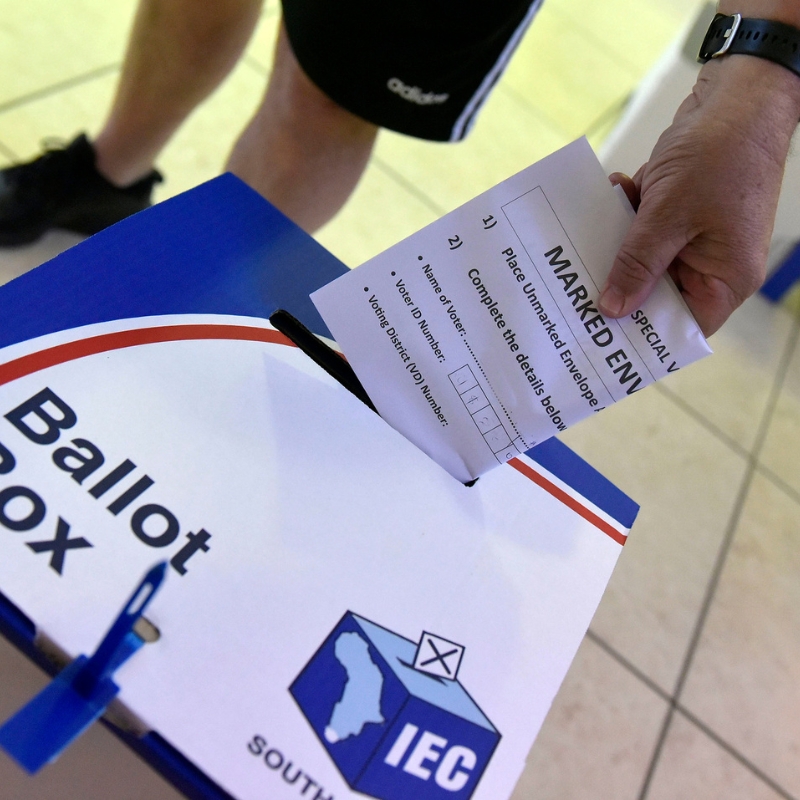
On 10 March, the Independent Electoral Commission (IEC) of South Africa briefed the public on preparations for the 2026/27 Local Government Elections. In the briefing, the IEC stated that amongst some of the issues it is concerned with is the lack of donations to the Multi-Party Democracy Fund (MPDF). The IEC reported that the MPDF received no contributions from private sources for the past 2 quarters. The lack of contributions was not attributed to any inherent flaws in the fund’s structure but rather to external factors, including donor preferences for direct donations to specific parties, prevailing economic conditions, fiscal constraints, and electoral timing dynamics.
What is the Multi-Party Democracy Fund?
The MPDF is a key component of South Africa’s Political Party Funding Act (PPFA) of 2018, designed to regulate and promote equitable private funding for political parties. Administered by the IEC, it serves as a pooled fund were private donors, individuals, corporations, or other entities, can contribute anonymously if desired, without directing money to a specific party. This mechanism aims to reduce the risk of undue influence from wealthy donors on individual parties, fostering a more level playing field in multiparty democracy.
Funds are distributed quarterly to represented political parties (those with seats in the National Assembly or provincial legislatures) and independent representatives, using a formula that combines proportional allocation (based on seats held) and equitable allocation (divided equally among all qualifying parties and independents).
This differs from the Political Representatives Fund (PRF, formerly known as the Represented Political Parties Fund or RPPF), which provides public taxpayer-funded allocations. The MPDF is intended to supplement private funding, encouraging broad-based support for democracy rather than targeted influence from specific donors.
Donors benefit from tax incentives and anonymity options, but the fund’s success relies on voluntary contributions.
Historical Challenge
Since the PPFA’s enactment in 2021, the MPDF has struggled with low uptake, receiving only sporadic and limited donations. Early reports were particularly dismal; in the first quarter of 2021/22, the fund received just R2,000 from a single individual. Contributions improved modestly in subsequent years, but overall, the fund has been described as having “little to no public interest,” with only a handful of donations recorded since inception.
Implications for Smaller Parties
The MPDF’s persistent underfunding has a significant impact for smaller political parties, which often rely on IEC-administered funds like the MPDF and RPPF for survival and competition. Unlike larger parties, which attract substantial direct private donations, smaller parties lack the networks or appeal for such support.
Without contributions, as seen in recent quarters, no distributions occur, exacerbating resource disparities ahead of the 2026/27 elections. This could undermine multiparty democracy, as smaller parties, often representing niche or marginalised voices, face heightened barriers to campaigning, voter outreach, and organisational sustainability.
Low MPDF inflows may force reliance on limited public funding or risky direct donations, potentially increasing vulnerability to influence or corruption. In a broader context, this trend highlights the PPFA’s limitations: while it enhances transparency, it has not sufficiently incentivized pooled funding.
Existing tax incentives (e.g., potential deductions under SARS rules) exist but are widely seen as insufficient, business stakeholders have told the IEC that stronger, clearer tax breaks (like more generous exemptions similar to public-benefit donations) are needed to compete with direct party giving, as current ones have not driven meaningful uptake amid donor preferences and economic pressures.
Finance Minister Enoch Godongwana, in his keynote address at the IEC’s Political Funding Symposium in 2025, proposed that political parties should be fully funded from the public purse. He argued that this would reduce reliance on private donors, prevent undue influence, and strengthen accountability, while calling for stronger auditing of parties receiving public funds and tasking delegates to consider the appropriate level and form of such funding. However, he qualified the idea by stressing it must be affordable given South Africa’s fiscal constraints, aligning with recent modest budget increases rather than a full overhaul.
Stronger promotion could involve more proactive IEC efforts beyond basic stakeholder engagements, such as targeted corporate outreach, partnerships with business associations, dedicated roadshows or webinars for high-net-worth donors, and campaigns highlighting the fund’s anonymity and democratic benefits, even if tax perks alone fall short, these could boost awareness and trust. To mitigate this, reforms along these lines would help ensure smaller parties are not sidelined in South Africa’s evolving political arena.
The MPDF’s ongoing challenges underscore the need for urgent reforms to the political funding framework, whether through enhanced pooled private contributions, bolder incentives and promotion, or exploring viable public funding expansions, to safeguard a level playing field, protect smaller and marginalised voices, and sustain vibrant multiparty democracy ahead of the critical 2026/27 local government elections.