
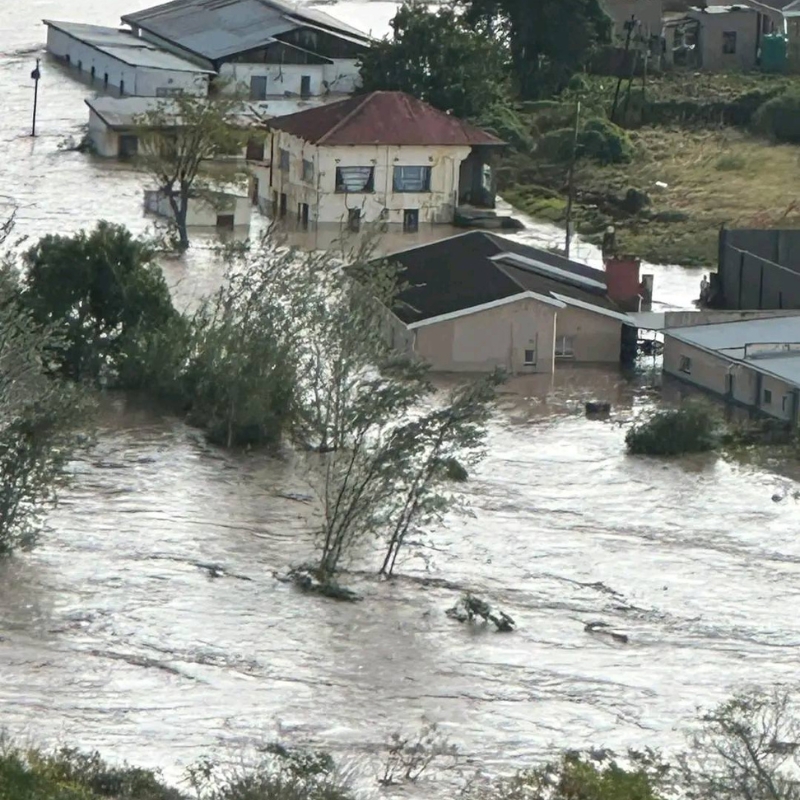
In South Africa, it does not take a once-in-a-century storm to expose systemic fragility. Often, a few days of heavy rain, a prolonged heatwave, or an extended drought is sufficient to reveal how thin the margins of resilience have become.
Over the past decade (2016-2024), floods in KwaZulu-Natal have resulted in widespread devastation, with cumulative fatalities running into the thousands, thousands more displaced, and infrastructure losses estimated in the billions of rand. Roads collapsed, water systems failed, and entire communities were cut off from essential services. In Gauteng, more recent localised flooding events have once again exposed the vulnerability of stormwater systems and urban infrastructure under pressure. In the Western Cape and Eastern Cape, recurring drought conditions continue to strain water security and agricultural output.
These events are no longer exceptional shocks. They are recurring stress tests of state capacity and, increasingly, of economic resilience.
Climate-related disruption has therefore moved beyond an environmental concern. It is now a structural determinant of investment confidence, infrastructure reliability, financial stability, and long-term development sustainability. The central question is no longer whether climate events will occur, but whether South Africa’s institutions can consistently absorb, manage, and recover from them without cascading systemic failure.
Institutional and policy architecture
South Africa does not lack a disaster risk governance framework. On paper, it is extensive and well-developed.
The Disaster Management Act (2002), the National Disaster Management Framework (2005, and subsequent refinements), and the 2011 National Climate Change Response White Paper (which has been supplemented over time) establish an integrated system built around prevention, mitigation, preparedness, response, and recovery. This framework recognises that disaster risk in South Africa is multidimensional: ranging from extreme weather events, droughts, floods, fires, and pandemics to technological hazards, social unrest, and cross-border shocks.
Importantly, it treats disaster risk management not as an emergency function, but as a developmental responsibility of the state, requiring coordination across national, provincial, and municipal levels, as well as participation from the private sector and civil society.
South Africa is also aligned with global frameworks, including the Hyogo Framework for Action and the Sendai Framework for Disaster Risk Reduction (2015–2030), which emphasise reducing risk through integrated economic, social, environmental, institutional, and governance interventions. The Sendai Framework is explicit in its ambition: to prevent new risk, reduce existing risk, and strengthen resilience across all levels of society.
Yet despite this strong policy foundation, implementation remains uneven and often weak.
South Africa’s challenge is not a lack of frameworks; it is a persistent deficit in execution, coordination, and institutional capacity, particularly at municipal level, where disaster risk is most directly experienced.
The execution gap and systemic exposure
The gap between policy design and operational reality is where South Africa’s climate vulnerability becomes most visible.
Repeated climate events expose structural weaknesses in governance systems: stormwater infrastructure that cannot handle sustained rainfall, ageing water networks, inadequate maintenance of roads and drainage systems, and uneven disaster response capacity across municipalities. These failures are not peripheral. They are central to the assumptions embedded in the disaster management framework.
When early warning systems are weak, coordination is fragmented, and infrastructure is under-maintained, disasters escalate from manageable events into systemic crises.
In this context, natural hazards become national emergencies not because of their scale alone, but because institutional response capacity is insufficient.
Compounding this is the interaction between climate variability and structural socio-economic conditions. Rapid urbanisation, informal settlement growth, land degradation, and infrastructure decay increasingly intersect with climate stressors, producing layered and compounding risk rather than isolated shocks. Disaster events therefore do not simply trigger response mechanisms. They test whether the state can operationalise its own prevention and resilience architecture under pressure.
Economic, financial, and investment implications
The economic consequences of this pattern are becoming more pronounced and systemic.
Climate-related disruptions increasingly affect transport corridors, logistics systems, water infrastructure, agricultural output, and energy reliability. For business, this translates into operational instability, supply-chain disruption, and production risk.
However, the financial implications now extend deeper into capital markets and investment systems.
Insurance markets are increasingly sensitive to climate exposure. Repeated flood and drought events increase claims volatility, pushing up premiums, reducing coverage availability, and in some cases limiting insurance participation in high-risk areas.
Credit markets are also adjusting. Climate exposure is becoming a more explicit component of sovereign, municipal, and project-level risk assessments. Weak resilience profiles translate into higher borrowing costs, tighter lending conditions, and reduced financing flexibility.
Infrastructure investment decisions are similarly shifting. Investors and lenders are increasingly applying resilience-weighted capital allocation frameworks, where the durability of assets under climate stress is a key determinant of project viability. In high-risk jurisdictions, this directly raises the cost of capital.
The result is a structural re-pricing of risk in which climate readiness is becoming embedded in insurance affordability and access, credit ratings and lending terms, infrastructure investment decisions, supply chain design, and long-term capital allocation strategies.
Over time, weak resilience profiles generate a compounding disadvantage: higher capital costs, reduced insurability, and declining investment attractiveness.
Governance, politics, and institutional credibility
The political implications are equally significant. Communities experiencing repeated infrastructure failures and delayed recovery efforts do not distinguish between climate shocks and governance failures. Over time, climate disruption becomes indistinguishable from perceptions of state effectiveness.
In KwaZulu-Natal, floods displaced thousands of households, many of whom were initially placed in Transitional Emergency Accommodation such as community halls, churches, and tented facilities. While elements of the recovery programme have progressed, including the handover of permanent housing units in Cornubia in May this year, recovery remains incomplete. In some cases, temporary arrangements have persisted for years due to delays in housing delivery, infrastructure servicing constraints, land allocation challenges, and municipal capacity limitations.
Similar patterns are visible in informal settlements across eThekwini, where repeated flooding has created cycles of displacement and return to high-risk zones. In Gauteng, localised flooding in areas such as Alexandra and parts of Soweto has exposed persistent stormwater failures, often followed by short-term emergency responses without sustained infrastructure upgrades. In the Eastern Cape and Western Cape, prolonged drought conditions have resulted in extended reliance on water tankering, effectively substituting emergency logistics for durable infrastructure solutions.
In all these cases, disaster risk management increasingly functions as a proxy measure of institutional credibility under stress.
Where recovery is delayed, uneven, or dependent on temporary measures, the boundary between disaster response and governance failure becomes increasingly blurred in public perception.
Why prevention and mitigation matter
This is why the Disaster Management Framework’s emphasis on prevention and mitigation is strategically critical. It shifts the focus from reactive crisis response to systemic resilience: infrastructure planning, land-use management, institutional coordination, and risk-informed development.
However, prevention remains difficult where enforcement capacity is weak or politically constrained. In many areas, informal or unlawful development continues in flood-prone zones and environmentally sensitive areas. Weak zoning enforcement, delayed relocation processes, and limited spatial planning capacity have contributed to the reproduction of risk rather than its reduction.
This creates a self-reinforcing cycle: vulnerable communities remain exposed, while municipalities are locked into repeated cycles of emergency response and costly recovery. Over time, the inability to enforce risk-sensitive planning undermines both institutional credibility and the effectiveness of the broader disaster risk framework.
The operational integrity of the State
South Africa does not suffer from a lack of policy architecture. It has a comprehensive legal framework, alignment with global best practice through the Sendai Framework, and defined institutional structures across all spheres of government.
The central constraint is execution.
What is being tested is not only environmental preparedness, but the operational integrity of the state itself: its ability to translate framework into function under conditions of stress.
Climate resilience is therefore no longer a technical or environmental objective. It is becoming a measure of state capacity, economic resilience, financial credibility, and institutional trust.
And increasingly, it is the weather – and the systemic shocks it triggers – that is asking the question first.


