
South Africa’s constitutional commitment to public participation is one of its democratic strengths. Yet participation cannot compensate for poor policy design. When departments fail to test evidence, assess impacts and engage stakeholders early, Parliament and the public are left trying to fix legislation that should have been better designed from the outset.
The country’s law-making process is at its best, when consultation is more than a tick box exercise, but an opportunity for law drafters and makers to listen, absorb evidence, test assumptions and improve the final law. The latest developments around the Tobacco Products and Electronic Delivery Systems Bill offer a useful reminder of both the promise and the frustration of public participation in our democracy.
The Portfolio Committee on Health’s decision to advance the Bill at the desirability stage, while making clear that the text still needs work, is significant. It is especially welcome that Members of Parliament, including from the ANC, appear to have accepted that the bill falls short of its intended outcomes and if anything, it will do more harm than good in its current form. Some of the significant comments from the committee members include the fact that combustible tobacco products and non-combustible nicotine alternatives should not be treated as if they carry identical risks and that the high levels of illicit tobacco trade in the country cannot be ignored.
That change of heart matters. Sound regulation should protect children and non-smokers, confront illicit trade and regulate nicotine products firmly. But it should also distinguish honestly between the different nicotine products that carry different risk profiles, as scientifically proven. the concept of tobacco harm reduction has been constantly dismissed by the Department of Health and its allies, as an industry rouse, however, there is ample evidence from all over the world that it can bear fruits. Harm reduction is not deregulation as some anti-vaping organisations will have you believe, it is the disciplined recognition that different products, behaviours and risks require different regulatory tools.
However, welcoming this shift by the Portfolio Committee on Health should not prevent legitimate criticism of how government conducts public participation. Too often, departments approach consultation as an obstacle to be survived rather than a constitutional and policy-making discipline that can improve the quality, legitimacy and implementability of law. The 2023 Mogale Judgement reinforced that public participation is central to South Africa’s democratic model. In that case, the Constitutional Court held that Parliament must facilitate meaningful engagement, not simply create opportunities for citizens to speak. The Traditional and Khoi-San Leadership bill is currently out for public comments until August. This is 3 years after the Mogale Judgement. How different would things have been if parliament itself had done things according to the book.
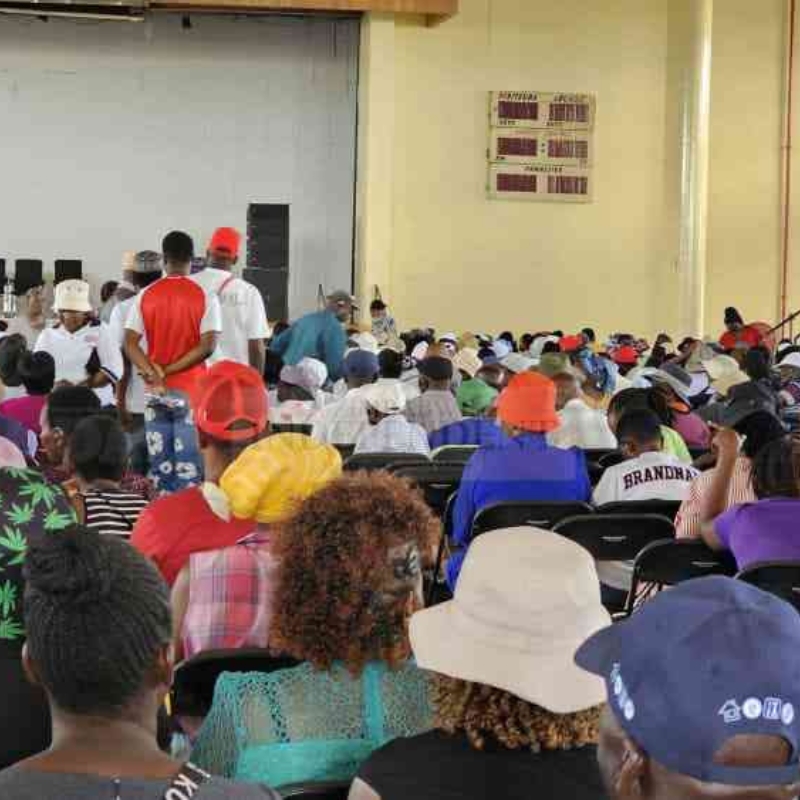
The Tobacco Bill attracted substantial public attention. Public hearings were held across all nine provinces, thousands of people attended, and tens of thousands of written submissions were made. That level of interest should be celebrated. It shows that citizens, businesses, civil society organisations and affected communities still believe that law-making is worth engaging in.
But scale is not the same as quality. A process can be large, expensive and procedurally impressive while still failing to narrow the issues early enough, communicate choices clearly enough or give stakeholders a realistic sense of how their evidence will be used. Public participation should not be measured only by the number of hearings, pages submitted or kilometres travelled. It should be measured by whether the process helps government make better decisions.
This is where departments, including the Department of Health, deserve criticism. Engagement on complex legislation is expensive for everyone. Government spends public money arranging hearings, processing submissions and defending policy choices. Citizens and organisations spend time, money and technical resources preparing inputs, travelling to hearings and trying to understand shifting policy positions. None of this is inherently wasteful; democracy has costs. But it becomes wasteful when the process is made more complicated than it needs to be.
Government already has tools designed to avoid this problem. The Socio-Economic Impact Assessment System (SEIAS) (first introduced in February 2007 and formalised in October 2015) was introduced to help departments assess the likely costs, benefits, risks and implementation effects of policies, laws and regulations before they reach the point of political contestation. The Presidency describes SEIAS as a system meant to improve policy formulation, minimise implementation risks and costs, encourage public participation and reduce unnecessary regulatory burdens.
The National Policy Development Framework serves a similar purpose. Approved by Cabinet in 2020, it was intended to regulate policy management processes, entrench evidence-based policy-making, clarify consultation inside and outside government and embed SEIAS in the policy cycle. In simple terms, these frameworks are not bureaucratic decoration. They are meant to make policy-making more coherent, transparent and efficient.
If these processes were followed properly from the start, Parliament and the public would not so often be forced to rescue policy at the back end. The purpose of early impact assessment and structured stakeholder engagement is to identify the central trade-offs before a bill hardens into departmental orthodoxy. In the case of the Tobacco Bill, the distinction between combustible and non-combustible products should not have required years of avoidable contestation to become central to the debate.
A more sensible process would have asked earlier and more clearly: what public health problem is each clause designed to solve; what evidence supports the proposed intervention; which groups will bear the costs; how will enforcement work in townships, informal markets and online channels; how will legitimate retailers be treated; and how will the law avoid strengthening illicit trade while trying to reduce harm?
These are not anti-regulation questions. They are pro-implementation questions. A law that cannot be enforced fairly, that confuses risk categories, or that imposes disproportionate burdens on small businesses and informal traders will struggle to achieve its stated public health objectives. Worse, it may push demand into illicit markets, where the state has even less visibility and consumers have fewer protections.
Public participation must therefore be more than a compliance exercise. It must be designed around intelligible choices. Government should publish accessible policy rationales, credible impact assessments, plain-language summaries of contested issues and clear explanations of how public submissions will be considered. It should separate moral panic from evidence, and political signalling from implementable regulation.
The ANC’s apparent willingness to differentiate between smoking and vaping harms is therefore important not only for tobacco policy, but for the broader practice of law-making. It suggests that Parliament can still correct course when evidence, stakeholder pressure and political judgment converge. But the fact that this correction is happening so late also shows why departments must improve the upstream policymaking process.
South Africa does not need weaker public participation. It needs smarter public participation. That means processes that are earlier, clearer, cheaper to navigate and more honest about trade-offs. It means departments must comply with the very frameworks government has adopted for evidence-based policy-making. It means public hearings should complement, not substitute for, rigorous impact assessment.
The next phase of the Tobacco Bill should be approached in that spirit. Parliament should use the clause-by-clause process to produce legislation that is tough where it must be tough, differentiated where the evidence requires differentiation and realistic about enforcement. Government should also treat this episode as a lesson in institutional humility: participation is not a favour granted to the public, but a constitutional mechanism for improving the state’s own work.
If government wants laws that survive scrutiny, command legitimacy and work in practice, it must stop making participation unnecessarily complex. The public has done its part by showing up. Now government must do its part by listening earlier, assessing impacts honestly and making policy in the disciplined way its own rules already require.
