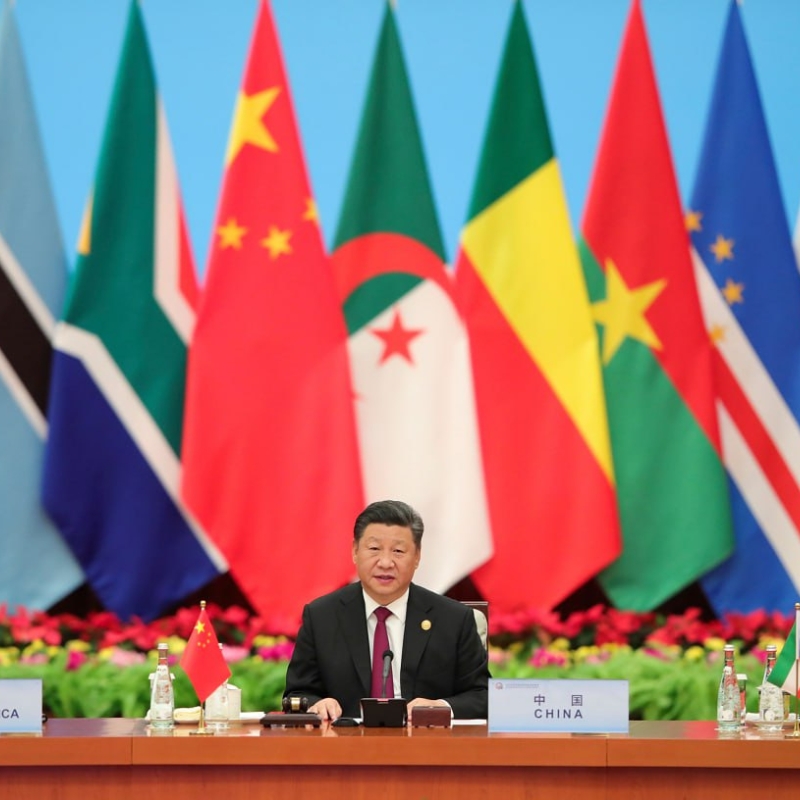
China’s announcement that, from 1 May 2026, it will grant zero-tariff treatment to imports from 53 African countries marks a significant development in Africa’s external economic relations. With only Eswatini excluded due to its diplomatic alignment with Taiwan, the policy expands preferential access to the Chinese market to nearly the entire continent. At face value, the initiative appears commercially generous: duty-free access to one of the world’s largest consumer and industrial markets at a time of heightened global trade fragmentation.
Yet the move must be read within a broader geopolitical context. China is not merely facilitating trade; it is consolidating influence. As tariff tensions with the United States remain uncertain and volatile, global supply chains become increasingly politicised and Beijing is positioning itself as a stable, long-term economic partner for Africa. The zero-tariff offer reflects a strategic effort to secure commodity flows, deepen diplomatic alignment, and anchor African economies more firmly within China-centred trade networks.
Insulation against global disruptions
Although, the announcement by China came before the current Middle East conflict, it has always been bubbling under and China like countries in Africa, are wary of the effect of an increasingly volatile global security environment. The currently unfolding military operations by the United States and Israel targeting Iranian military infrastructure introduce a destabilising overlay to global trade politics. Iran’s geographic position near the Strait of Hormuz – a chokepoint through which a substantial portion of global oil transits – raises the prospect of energy market volatility, shipping insurance surcharges, and supply chain disruption if escalation continues.
China’s exposure to the Gulf, particularly via the Strait of Hormuz, is real and strategically significant. Roughly 40% of China’s crude oil imports originate from Gulf producers such as Saudi Arabia, Iraq, United Arab Emirates, Kuwait and Qatar, most of which transits the Strait of Hormuz. Any sustained disruption there would materially affect China’s energy security.
The question, however, is not whether China would be affected, but whether such disruption would be economically survivable and how it would shape China’s Africa policy, including its zero-tariff regime.
Building on FOCAC Commitments
The initiative builds on earlier Forum on China-Africa Cooperation (FOCAC) commitments that prioritised least-developed countries. Its extension to middle-income economies such as South Africa, Nigeria, and Kenya signals that Beijing’s Africa strategy has matured beyond aid diplomacy into structural economic integration. Africa’s exports to China already exceed $120 billion annually, dominated by minerals, oil, and agricultural commodities. Zero tariffs are likely to increase volumes flowing into China but not necessarily alter the composition of trade.
For African businesses, the opportunities are tangible. Removing tariff barriers improves price competitiveness and margin potential, particularly in agriculture, mining, and selected manufactured goods. Exporters facing uncertainty in Western markets gain diversification options. Chinese demand for food products, industrial inputs, and consumer goods continues to expand, creating potential growth channels for firms able to meet regulatory and logistical standards. Additionally, the policy may stimulate foreign direct investment if Chinese firms establish local processing facilities or joint ventures to secure inputs more efficiently.
However, these benefits are neither automatic nor evenly distributed. The deeper structural risk lies in what might be termed the “lock-in effect.” When raw materials enjoy frictionless export access, the incentive to invest in domestic processing weakens. Why build smelters, refineries, or agro-processing plants if unprocessed commodities face no barriers in China? Without negotiated value-addition requirements, local content thresholds, or coordinated industrial policy alignment, zero-tariff access could entrench rather than transform Africa’s export structure.
This concern intersects directly with the ambitions of the African Continental Free Trade Area (AfCFTA). The AfCFTA seeks to raise the levels of intra-African trade, currently around 15% of total trade, by developing regional value chains and industrial clusters. Yet zero-tariff access to China may divert both trade and investment away from regional integration. Exporters may prioritise the scale and predictability of Chinese demand over building continental supply chains. Capital may flow toward extraction sectors rather than manufacturing corridors. Governments may focus on bilateral export growth instead of undertaking the more complex structural reforms required for AfCFTA industrialisation.
The trade imbalance further complicates the picture. Africa imports machinery, electronics, and manufactured goods from China at scale, while exporting primary commodities. The zero-tariff policy eases African exports but does not restrict Chinese imports into African markets. This asymmetry risks reinforcing de-industrialisation pressures in several economies. Short-term mineral export gains could coexist with longer-term manufacturing decline, particularly in countries with fragile industrial bases.
Africa as a contested theatre
For African economies, particularly oil importers, continued Middle East volatility could trigger fuel inflation, currency pressure, and fiscal strain. For South Africa, rand weakness and fuel price pass-through effects would affect both consumer demand and production costs. More broadly, heightened Middle East tensions risk accelerating the hardening of US-China strategic rivalry. In such a scenario, Africa becomes not merely a trade partner but a contested strategic theatre, central to supply chain security, critical minerals access, and diplomatic alignment.
Thus, China’s zero-tariff initiative must be understood not only as trade facilitation but as supply chain fortification. Securing long-term commodity inflows amid geopolitical fragmentation is consistent with Beijing’s broader strategy of insulating itself from Western containment risks. Simultaneously, Western powers may intensify efforts to counterbalance Chinese influence, increasing the diplomatic and economic complexity facing African states.
The policy does not eliminate African agency. Its long-term impact depends on domestic and continental responses. Governments could align Chinese investment with AfCFTA industrial corridors, negotiate value-addition commitments, strengthen beneficiation incentives, and diversify trade partnerships to avoid over-concentration risk. Firms, for their part, may need to adopt more sophisticated currency hedging strategies, diversify export destinations, and build resilience against geopolitical supply disruptions.
Ultimately, China’s zero-tariff offer encapsulates the duality of Africa’s position in a shifting global order. It expands market access and commercial opportunity at a time of fragmentation. Yet without strategic calibration, it risks reinforcing patterns of commodity dependency and delaying continental industrialisation ambitions. The question is not whether Africa should engage China. Engagement is inevitable and economically rational. The more consequential question is whether that engagement will be structured to advance structural transformation or simply to accelerate resource extraction under a new geopolitical configuration.
In an era defined by bloc competition, supply security politics, and renewed great-power rivalry, Africa’s strategic choices will determine whether zero-tariff access becomes a catalyst for industrial growth or another episode in externally anchored development. The outcome remains open – but it will not be determined by tariff schedules alone.