Strategic Context
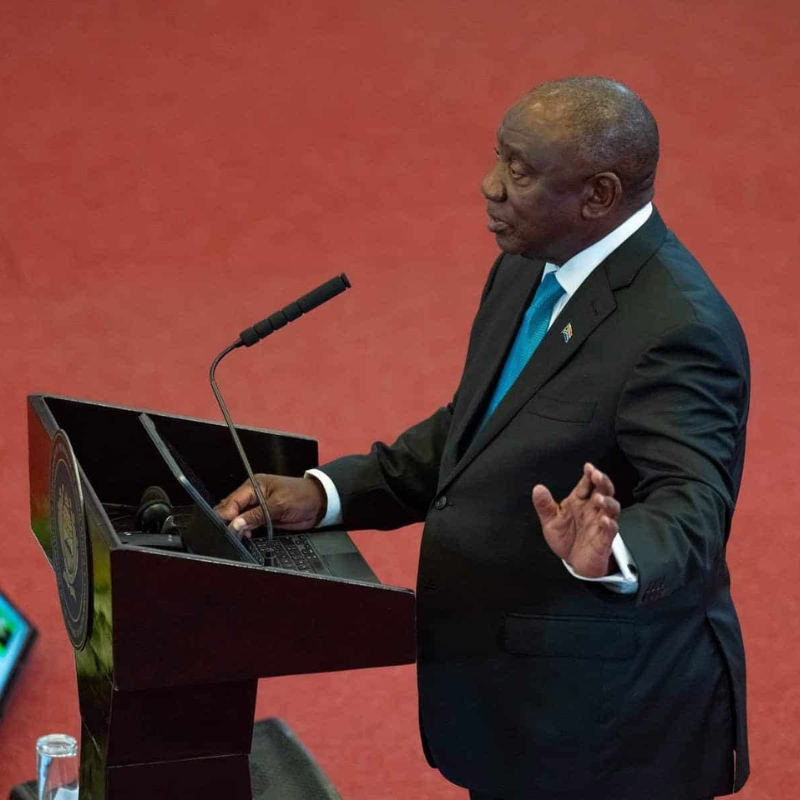
President Cyril Ramaphosa delivered the 2026 State of the Nation Address (SONA) against a backdrop of persistent structural challenges. South Africa faces high unemployment (31.9% nationally and about 60% among youth), weak municipal performance, and fiscal constraints, alongside growing public demand for social equity and transformation.
These pressures are compounded by global dynamics, including precarious diplomatic relations, trade volatility, and climate risks.
The 2026 SONA signalled a dual government strategy: stimulate growth while strengthening institutional governance.
By anchoring policy in historical milestones, the 1956 women’s march to the Union Buildings, 1976 uprisings, and the 1996 Constitution, Ramaphosa sought to communicate a clear message that transformation and inclusion remain non-negotiable.
For businesses, this signals regulatory expectations: compliance with transformation mandates and proactive engagement in social impact are not optional but central to operational legitimacy.
Economic performance
SONA 2026 presented a cautiously optimistic macroeconomic picture: four consecutive quarters of GDP growth averaging 2.5%, inflation at 4.3%, and a stabilising rand (17 ZAR/USD). While these metrics reflect recovery, structural weaknesses remain. Persistent unemployment and slow job creation highlight that current growth is insufficiently inclusive.
Operation Vulindlela was framed as a structural lever for reform, but analytical scrutiny suggests that investor confidence will hinge on consistent implementation.
The address identified infrastructure bottlenecks, energy costs, and municipal inefficiencies as constraints. Therefore, while headline growth is positive, the structural capacity of South Africa’s economy to absorb labour and sustain equitable growth remains limited.
Fiscal signals and corporate implications
The President signalled potential corporate and excise tax adjustments, particularly in alcohol, tobacco, and sugar-sweetened beverages. These measures could compress margins and affect pricing strategies, emphasising the importance of scenario planning for corporates.
Illicit trade enforcement, particularly in tobacco (R4.6 billion lost annually), alcohol (R2.2 billion), and fuel (R5 billion), represents both a revenue recovery opportunity and a regulatory risk.
Corporates in affected sectors must adopt robust compliance frameworks while engaging policymakers to anticipate enforcement dynamics. Analytical observation suggests that firms failing to adapt may experience both direct revenue losses and reputational risk.
Energy and industrial policy
SONA 2026 underscored a decisive shift toward renewable energy, targeting 40% of the national supply from wind and solar by 2030. Eskom restructuring and the creation of an independent transmission entity are designed to increase competition and reduce costs.
This presents significant private sector opportunities but introduces complexity around regulatory alignment and investment risk.
Industrial policy emphasises high-value manufacturing and critical mineral beneficiation, supported by incentives such as the 150% tax deduction for energy vehicle investment.
International pledges of R250 billion under the Just Energy Transition Investment Plan further reinforce these opportunities.
Corporates must weigh transformational potential against execution risk, including licensing, compliance, and infrastructure readiness.
Infrastructure and public investment
Government plans R1 trillion in infrastructure over three years – the largest allocation in South African history. While this can accelerate growth and job creation, analytical insight suggests that implementation efficiency is the key determinant of impact. Delays from tender disputes, procurement inefficiencies, or weak municipal capacity could limit outcomes.
The strategic choice of public-private partnerships, exemplified by the Durban Pier 2 Container Terminal, indicates a move to combine private sector efficiency with public ownership. These arrangements must balance accountability, risk-sharing, and transformation objectives, which is analytically critical for sustainable project delivery.
Social policy: equity and human capital
The 88% matric pass rate in 2025 represents measurable improvement, but dropout rates remain high, and early childhood malnutrition affects 27% of children under five. Public employment initiatives, like the Presidential Employment Stimulus (2.5 million opportunities), demonstrate short-term impact, yet long-term skills development and systemic reforms are necessary to translate temporary employment into sustainable livelihoods.
Social grants, early childhood development, and youth employment measures serve as mechanisms to reduce inequality and enable social mobility. The integration of these programs with education and labour policies will determine whether they contribute to a structurally more equitable economy or merely provide short-term relief.
Crime, corruption, and governance
SONA 2026 identified crime, corruption, and municipal inefficiencies as key constraints to economic and social stability. The recruitment of 5,500 police officers, deployment of the SANDF, and targeted anti-gang operations represent tactical enforcement strategies, but the systemic root causes – weak local governance, corruption in procurement, and social inequality – remain.
The government’s approach of combining immediate enforcement with long-term institutional reform reflects a dual-track strategy, yet its effectiveness will depend on inter-agency coordination, political will, and resource allocation.
Corporates should view this as a signal of heightened regulatory scrutiny, particularly in sectors exposed to illicit activity or public procurement.
Health, gender, and social inclusion
SONA 2026 highlighted investments in healthcare infrastructure, HIV prevention through Lenacapavir, HPV vaccination, and GBV interventions. These initiatives are critical for human capital development, which underpins economic productivity.
However, scale and execution risks remain, particularly in rural and underserved areas. The address emphasises both immediate interventions and structural reform, reflecting an understanding that social inclusion is inseparable from economic resilience.
International engagement
South Africa positions itself as a regional hub for trade and industrialisation, leveraging the African Continental Free Trade Area (AfCFTA) (1.4 billion market) and critical mineral reserves valued at R40 trillion.
The first five South Africa Investment Conferences raised R1.5 trillion in commitments, with R600 billion already deployed, and a target of R2 trillion over five years. These initiatives can catalyse industrialisation, but outcomes depend on policy stability, local content enforcement, and investment certainty.
Conclusion
SONA 2026 presents a comprehensive agenda combining growth, fiscal prudence, social inclusion, and governance reform. The address communicates a dual narrative: short-term interventions to stabilise the economy and improve public services, alongside structural reforms to support sustainable growth.
For corporates and investors, the analytical takeaways are clear: strategic engagement, scenario planning, and transformation compliance are essential to navigate fiscal, regulatory, and operational risks.
The address reflected the government’s intent to balance opportunity with enforcement, signalling that success in South Africa requires both agility and alignment with national development priorities.