
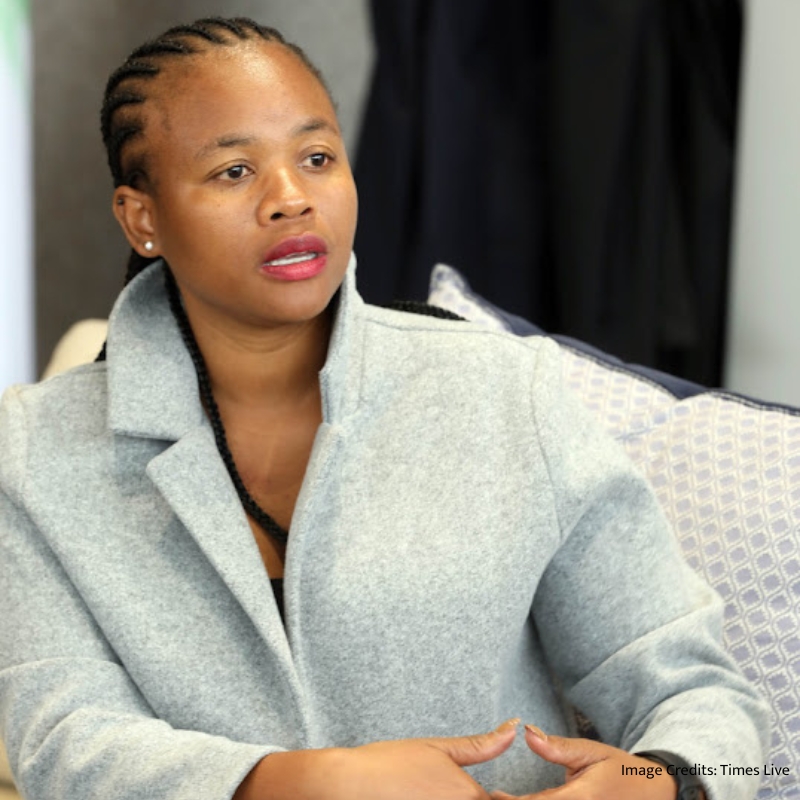
In the competitive and often volatile landscape of South African politics, perception is power. While delivery remains a crucial metric for measuring government effectiveness, the ability to communicate that delivery persuasively and consistently is what ultimately shapes political reputations. Dr. Nasiphi Moya, the Executive Mayor of the City of Tshwane and a member of ActionSA, offers a compelling example of how strategic communication and public relations (PR) can elevate both a leader’s credibility and a party’s broader appeal.
Since assuming office in October 2024, Dr. Moya has made communication a central pillar of her governance approach. From the outset, she positioned herself as a unifying figure, declaring her intention to serve all four million residents of Tshwane, regardless of political affiliation. This deliberate message of inclusivity has become a hallmark of her administration and set the tone for a transparent, people-focused style of leadership.
Dr. Moya’s PR strategy has revolved around active community engagement, visibility, and a narrative of urgent delivery. One of her first major moves was to launch a series of community meetings, or “imbizos,” across the city. These engagements were designed not merely as information sessions, but as platforms for listening to residents’ concerns and reporting back on government plans and progress reports. They helped bridge the trust gap between city leadership and ordinary citizens, many of whom have long felt alienated from municipal processes.
Additionally, her administration unveiled the “Re A Spana” 100-day action plan, a bold initiative aimed at addressing critical service delivery challenges with visible results. From improving water supply in Hammanskraal to enhancing public safety and restoring financial discipline in the municipality, the plan sent a clear message, this is a government that listens, acts, and reports back.
Dr. Moya’s decision to include members from various political parties, including ActionSA, ANC, EFF, and GOOD, in her Mayoral Committee further signalled a commitment to inclusive governance. In a city often plagued by coalition instability, this move demonstrated maturity and strategic foresight. It also helped shift public discourse from political squabbling to cooperative service delivery.
A key strength of Dr. Moya’s approach has been her effective use of political mass communication tools. Her office has utilised an integrated, multi-platform communication strategy that prioritises accessibility, repetition, and community ownership of messaging.
This includes:
- Weekly appearances on popular local radio stations such as Motsweding FM and Tshwane FM, where she takes live questions from listeners and provides progress updates in vernacular languages, particularly Setswana, Sepedi and isiZulu.
- Professionally produced video content disseminated on social media platforms like Facebook, X (formerly Twitter), TikTok, and YouTube, showcasing before-and-after service delivery projects, community interactions, and behind-the-scenes footage of the mayor’s daily engagements.
- WhatsApp community groups coordinated through ward councillors and activists, used to circulate real-time alerts on service disruptions, project launches, job opportunities, and feedback loops for complaints.
- Regular features in local newspapers and newsletters, including columns penned by the mayor herself, breaking down complex governance issues in accessible language.
This 360-degree communication approach ensures that city residents are not only informed but also feel included and empowered. It has also helped to counteract misinformation and pre-empt negative narratives by controlling the flow and framing of information. These tools make politics relatable and present local government as something tangible and responsive, rather than abstract and bureaucratic.
But the contrast is equally instructive. Many political parties and leaders in South Africa continue to struggle with the consequences of underestimating the power of PR. They deliver services, sometimes efficiently and at scale, but fail to tell the story in a way that resonates with the public.
Consider the Democratic Alliance (DA), which governs Cape Town and several other municipalities. In many respects, the DA has excelled in core areas of municipal management such as infrastructure upkeep, clean audits, and responsive governance. Yet the party has faced persistent criticism, particularly in working-class and poor communities, for appearing distant or unsympathetic. Its communication strategy often leans heavily on statistics and technocratic language, missing the emotional and narrative connection that make governance relatable to everyday people. This has contributed to a decline in support in several communities, despite tangible delivery.
Similarly, in ANC-led municipalities, there are pockets of genuine success in housing, water infrastructure, and electrification. However, in the absence of strong communication campaigns and a clear narrative, these achievements often go unnoticed. Voters are left unaware of who is responsible for improvements, and opposition parties’ step into the vacuum with negative messaging that sticks. The result is a misalignment between performance and perception, a costly failure in any democracy.
These cases underscore an essential truth, that in politics, it is not enough to do the work. You must also be seen to be doing the work and doing it with compassion, competence and clarity. Public relations and communication must therefore be embedded into every stage of governance, from planning and implementation to feedback and reporting.
Dr. Moya’s success so far shows that when leaders speak plainly, listen actively, and communicate consistently, they win not only support but legitimacy. Her approach should serve as a template for political leaders across the country who seek to build trust and translate service delivery into sustainable political capital, especially as we approach the 2026 Local Government Elections where local governance issues will be the central focus.
In the age of social media, 24-hour news cycles, and digitally connected communities, good governance and good PR are no longer separate endeavours. They are mutually reinforcing and essential to effective leadership in a modern democracy.