Recently a number of multinational corporations, such as ArcelorMittal South Africa, Glencore, Rio Tinto, and Goodyear have announced either exits or large-scale downsizing of their South African operations. While the reasons cited range from global restructuring to sector-specific challenges, common themes emerge: declining profitability in the local market, energy insecurity, infrastructure backlogs, and regulatory uncertainty. These developments have reignited a pressing question: is South Africa still an attractive investment destination?
This is not an academic concern. With unemployment entrenched above 33%, poverty deepening, and inequality widening, the country can still afford capital flight. If the current situation persists, the Government of National Unity’s (GNU) priorities as set out in the Medium-Term Development Plan (MTDP) 2024-2029, will not be realised. The MTDP’s three strategic national priorities are: Driving inclusive growth and job creation; Reducing poverty and tackling the high cost of living, and building a capable, ethical and developmental state. These priorities rests on the country attracting increased and sustained levels of direct investments.
Companies exiting the South African market
Recently, ArcelorMittal reported that its failed attempt to secure funding will see the potential closure of its long steel business in Newcastle in KwaZulu-Natal, with some impact in its Vereeniging operations as well. This is despite Industrial Development Corporation (IDC) providing the company with R2.6 billion, including a R1.68 billion interest-free loan in March, to delay closure and buy time for possible solutions through policy changes, partnerships, and assistance from the Department of Trade, Industry and Competition (DTIC). The company has already issued Section 189 notices under the Labour Relations Act and it is reported that roughly 4,000 or more jobs are in jeopardy.
Another multinational company, Glencore has entered formal consultation on retrenchments with the possibility of over 2000 direct and 17,000 indirect jobs being at risk. The company has stated that a host of challenges including power cuts, increasing electricity costs and broader economic pressures have affected the viability of its joint venture smelter operations with Merafe Resources. Glencore has already suspended production at its Boshoek, Wonderkop and Lion smelters in May.
Similarly, tyre manufacturer Goodyear announced it will close its Nelson Mandela Bay manufacturing plant by the end of 2025 following a global wide restructuring affecting Europe, the Middle East and Africa (EMEA), bringing to an end nearly 78 years of local production. Although, Goodyear is not leaving South Africa altogether, it will continue operating its sales, distribution, and Hi-Q retail network, this move will affect approximately 900 employees raising concerns in the Eastern Cape, which already struggles with high unemployment
These are not isolated cases; they are symptomatic of a broader erosion of investor confidence in South Africa’s operating environment.
Setback for Government
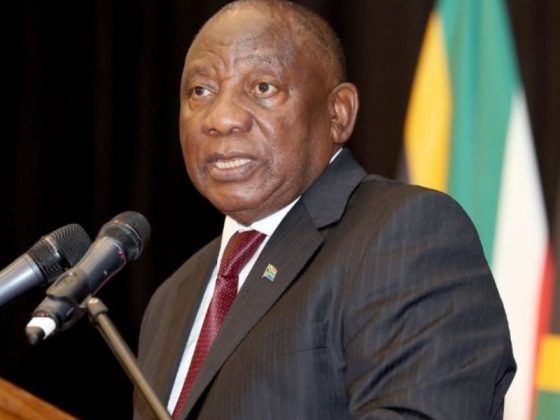
Since 2018, President Cyril Ramaphosa launched an investment drive with the goal of creating about 412,000 direct jobs over the next 5 years. At the 2023 investment conference, Ramaphosa announced that the investment pledge target of R1 trillion, was surpassed by 26 percent. At the same conference, he set a new target of R2 trillion worth of investments for South Africa to achieve over the next 5 years.
However, it is worth noting that most of the pledges made never materialised into concrete investments and South Africa’s unemployment rate now sits at over 33% from 29.1% in 2019.
According to UN Trade and Development (UNCTAD), South Africa experienced a decline in Foreign Direct Investment (FDI) inflows from 2023, attracting only $2.47 billion in 2024, while Africa as a whole attracted a record $97 billion. Egypt on the other hand, attracted over $46.58 billion in FDI inflows. This indicates that South Africa is facing increased competition for investments in Africa and will need to fast track reform measures that have long being touted as essential for attracting more investors to the country.
There is progress that has been made through Operation Vulindlela to remove the constraints that have hampered the country’s economic growth, such as ensuring reliable energy supply, capacitating rail and ports, clearing the visa application backlog, and expanding the eVisa scheme to make it easier for investors and tourists to come into the country.
In May, government launched Phase 2 of Operation Vulindlela reforms to boost economic growth and create jobs, focusing on energy, water, freight logistics, the visa system, local government, spatial integration and housing, and digital public infrastructure. How quickly government works to initiate these reforms will be critical to setting the country back on track to make it a top destination of FDI on the continent.
Yet progress is uneven and often too slow to match the urgency of investor concerns. Although energy reforms seem to be gaining traction, rail and port inefficiencies continue to throttle exports; and municipal governance failures create unpredictability for businesses on the ground. Unless these reforms are accelerated, disinvestment will outpace new inflows, undermining both growth and fiscal stability.
Not all Doom and Gloom
It would be misleading, however, to portray South Africa as devoid of opportunity. There are bright spots that illustrate the country’s enduring appeal.
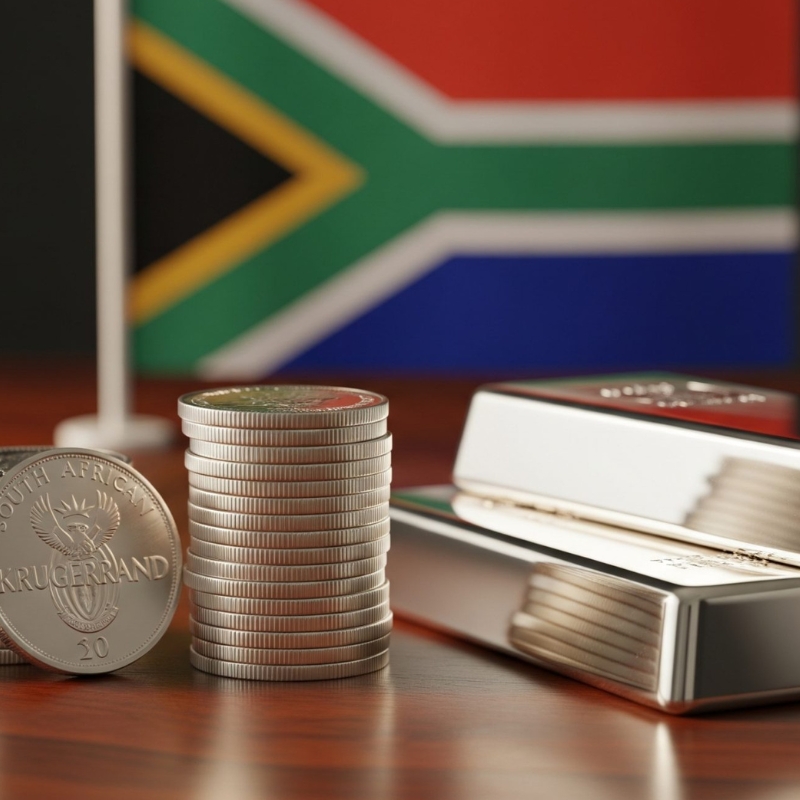
South Africa remains a compelling investment market. According to the South African Reserve Bank’s (SARB) June Quarterly Bulletin, South Africa attracted FDI inflows totalling R11.7 billion (approximately $661.46 million) in the first quarter of 2025.
Chinese automakers such as BYD, Great Wall Motor (GWM), and Chery, view South Africa as a crucial entry point into Africa, especially as trade barriers tighten in Western markets. In the past year alone, nearly half of the 14 existing Chinese automotive brands launched in the country, with more set to enter the market and BYD planning to almost triple its dealership network by 2026 while exploring local assembly options. Isuzu Motors South Africa is also scaling up, aiming to make South Africa its primary hub for commercial truck production on the continent. Its goal is to boost its share of African production from around 22% to 45%, leveraging the African Continental Free Trade Area (AfCFTA) to increase truck exports in West Africa. In fintech, Brazil’s Nubank recently invested $150 million in South Africa’s Tyme Group, raising Tyme’s valuation to $1.5 billion.
These examples show that where the fundamentals align; infrastructure, skilled labour, access to regional markets, South Africa still presents compelling opportunities.
Ultimately, South Africa stands at a crossroads. The exodus of companies like ArcelorMittal, Glencore, and Goodyear underscores the cost of delayed reforms and crumbling infrastructure. At the same time, new entrants in automotive and fintech show that the country retains unique advantages, from its industrial base to its gateway role into Africa.
The real question is whether government can act with the speed and decisiveness required to stabilise the investment climate. Operation Vulindlela II must not become another set of promises deferred. Investors need clear signals of reliability in electricity supply, efficient logistics, transparent policy, and a capable state.
If reforms stall, South Africa risks sliding further behind rivals like Egypt, Morocco, and Kenya in the battle for capital. But if government delivers, the country can still reclaim its place as Africa’s premier investment destination.
For now, the window of opportunity remains open, but it is narrowing fast.