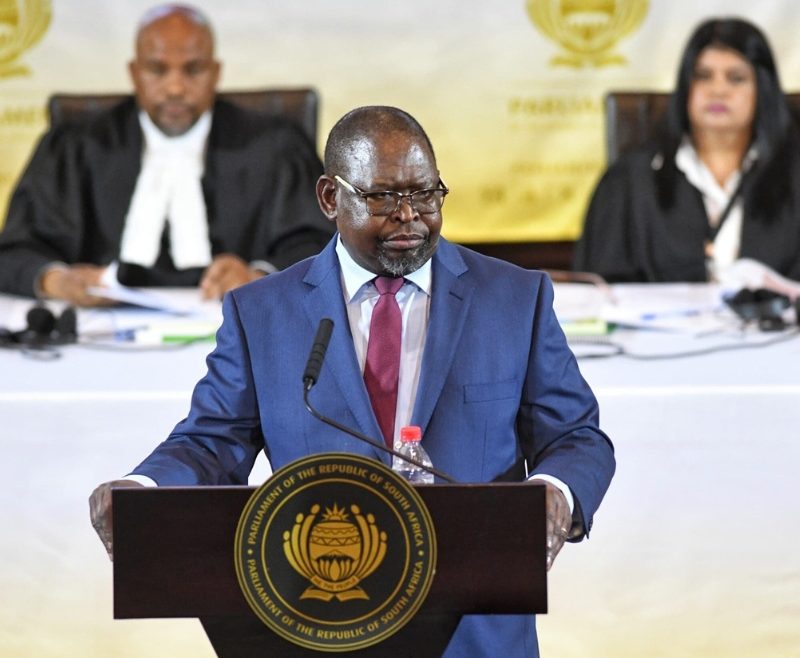
Day 1 of the 2026 TIPS Annual Forum demonstrated that the debate on African industrialisation has fundamentally shifted. The central question is no longer whether Africa should industrialise, but how Africa should industrialise in an era characterised by geopolitical rivalry, fragmented trade, technological disruption and climate transition. This represents a decisive departure from the post-Cold…
read moreOverview The second day of the 2026 TIPS Forum shifted the conversation from why industrial policy has returned to how Africa should industrialise in an increasingly uncertain global environment. While Day 1 highlighted the impact of geopolitical fragmentation, economic security and strategic competition on the resurgence of industrial policy, Day 2 explored the practical pathways…
read moreSouth Africa is heading toward another cycle of local government elections, with the Independent Electoral Commission (IEC) having already designated 20-21 June as a nation-wide voter registration weekend. In terms of the Constitution the elections could be held anytime between November 2026 and January 2027. With it comes a familiar public debate: who should fund…
read moreThe 2025 Medium-Term Budget Policy Statement (MTBPS), delivered by Finance Minister Enoch Godongwana on 12 November, marks a delicate balancing act between fiscal prudence, political compromise, and reform-driven recovery. It arrives at a moment of renewed fiscal discipline but persistent political fragility, where the Government of National Unity (GNU) faces the dual challenge of maintaining…
read moreAs the African National Congress (ANC) prepares for its National General Council (NGC) in December, the party faces one of the most consequential moments of introspection since 1994. For party president Cyril Ramaphosa, the gathering is more than an internal review; it is a mid-term test of whether his ambitious “new dawn” reform agenda, unveiled…
read moreSince the advent of democracy in 1994, Pretoria has invested heavily in cultivating influence through multilateralism and moral leadership. From strengthening SADC and AU institutions to championing reform of UN governance and global financial architecture, to activism in BRICS, South Africa has sought to position itself as a principled voice for the Global South. Its…
read moreThe South African Communist Party (SACP) has long styled itself as the ideological conscience of the South Africa’s liberation movement, led by the ANC. Since the democratic transition of 1994, it has remained anchored in the Tripartite Alliance with the ANC and the trade-union federation COSATU. Within the Alliance, the SACP has shaped debates on…
read moreMeaningful public participation and parliamentary oversight are the cornerstones of democratic governance in South Africa. When Parliament fails in these duties, the judiciary often intervenes, sometimes with significant consequences for legislation, governance, and the separation of powers. From the Nkandla saga, State Capture and several bills, the judiciary has also found itself encroaching into the…
read moreThe allegations made at a Sunday 6 July 2025 press conference by KwaZulu‑Natal Provincial Commissioner of Police, Lt‑Gen Nhlanhla Mkhwanazi are nothing short of seismic; a no-holds-barred exposé accusing Police Minister Senzo Mchunu of having ties to corrupt businessmen, meddling in criminal investigations, and suppressing prosecutions. Mkhwanazi claims that the work of the KZN’s Political…
read moreOn 14 June 2024, following a historic election where the African National Congress (ANC) failed to garner an outright majority of national votes, Parliament held its first sitting, where Cyril Ramaphosa was elected South Africa’s President. It was the first time since the dawn of democracy that the ANC needed votes from other parties in…
read more