At the beginning of April, the Central Committee of the South African Communist Party (SACP) held its first Plenary of the year. It reiterated its stance to contest the 2026 local government elections across the country, in line with the declaration and resolutions of the Party’s 15th National Congress held in 2022 and the Fifth Special National Congress.
Since 1994, the SACP has been backing the African National Congress (ANC) in both general and local government elections. In turn, SACP leaders have been deployed to government as Ministers or Deputy Ministers. However, over the years, the SACP and ANC have clashed over economic policies and political decisions, with the former feeling neglected and debating whether it should exit the tripartite alliance. The party’s General Secretary, Solly Mapaila, said the decision to contest the 2026 election was not a decision to leave the Tripartite Alliance, but freeing the party from abuse by the ANC.
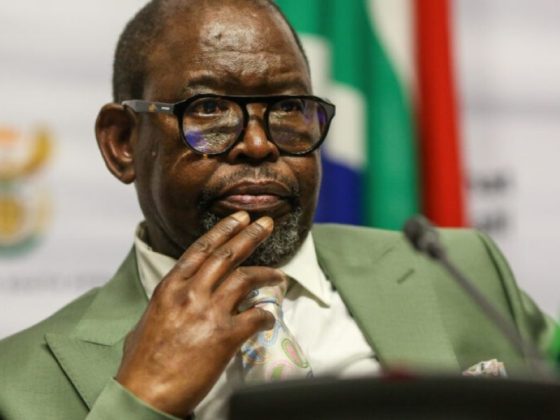
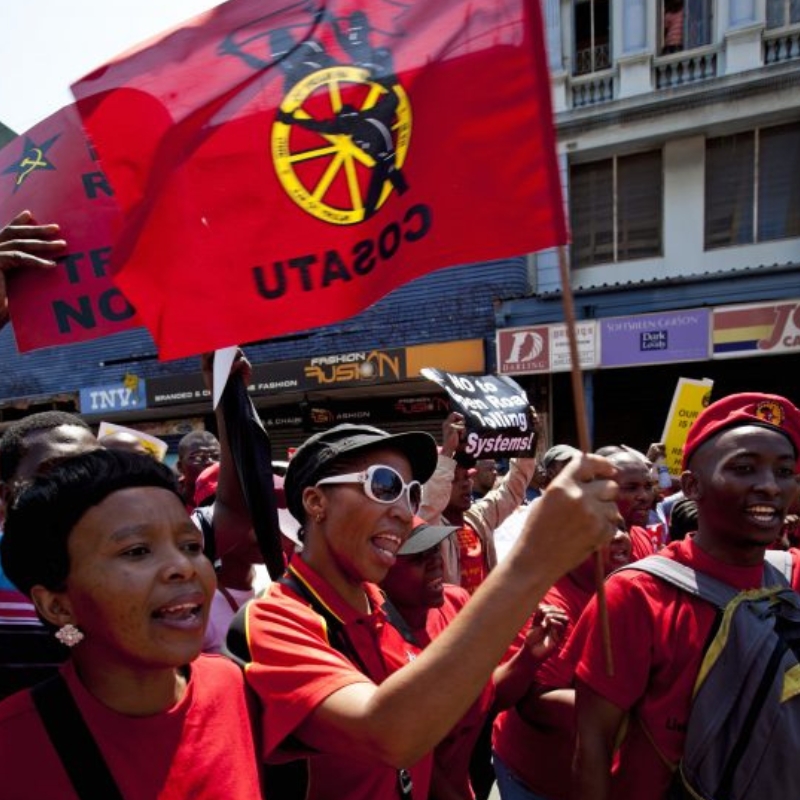
Another Alliance partner, the Congress of South African Trade Unions (COSATU) has been in the same boat as the SACP and saw its blind loyalty to the ruling party leading to losses in membership and slow fade into oblivion in South Africa’s trade unionism and politics. In 2022, the trade union reported that it shed over 416 000 members since 2015. Now, COSATU is mulling over the question of whether it will back between the ANC or SACP in the upcoming local government elections. At its national congress in 2018, the federation resolved to support a reconfigured alliance led by the ANC, and if that did not happen it was going to support the SACP in the 2021 local government elections. With the SACP opting not to contest the elections, COSATU threw its lot behind the ANC. However, recently, COSATU sided with the SACP in its opposition to the make-up of the GNU and the 0.5% increase in Value Added Tax (VAT) proposed by the National Treasury – led by ANC Minister Enoch Godongwana.
The question arises again on whether the Tripartite Alliance has run its course, and whether it is time for the SACP and COSATU to go their separate ways from the ANC? As stated by Mphutlane wa Bofelo in an opinion piece in 2023, ahead of the first national democratic elections in 1994, the ANC sought organisational skills, material support, membership and electoral support from the alliance partners. For their part, COSATU and SANCO needed a political organisation that could win elections, hold political power and advance a progressive agenda that would safeguard labour and civil society interests in Parliament. The relationship has been mutually beneficial in theory, but in practice, the alliance partners have not had as much success in influencing ANC policies and programmes as they had wished. This saw COSATU, SACP and SANCO leaders become careerists, using their positions as a stepping stone to deployment into government, or business.
Political and Ideological Clashes
The SACP and COSATU have previously threatened to pull their support for the ANC for its failure to include them in governing decisions and its adoption of neoliberal economic policies.
For instance, in the 1990s, the SACP and COSATU were opposed to the Growth, Employment and Redistribution (GEAR) strategy, arguing that it undermined the working class and deviated from the alliance’s shared vision of socialism. GEAR’s emphasis on privatisation, deregulation and business-led economic growth clashed directly with the interests of SACP and COSATU, who argued that it served the interests of capital, not the working class. However, the ANC government proceeded with the implementation of the strategy without tangible opposition from its alliance partners.
The ascendence of Jacob Zuma to the presidency of the ANC in 2007 was touted by the alliance partners as an opportunity to challenge neoliberal economic policies and prioritise the needs of the working class, but their hopes were dashed, as Zuma did not turn around the fortunes of the alliance partners and they later expressed regret for supporting his candidacy and his continued pursuit of neoliberal economic policies during his tenure in government.
Following the ANC’s loss of governing majority in the 2024 elections, the SACP and COSATU were vocal in their opposition to the inclusion of the Democratic Alliance (DA) and Freedom Front Plus (FF+) in the Government of National Unity (GNU). The two alliance partners further claimed that they were not consulted by the ANC on the formation of the GNU and had somewhat felt betrayed by the party, especially after they campaigned for it in the elections. Feeling the pain of being ignored, the SACP’s Mapaila used every available platform to criticise the ANC for ignoring his party’s recommendation to form a government with the Economic Freedom Fighters (EFF).
With the ANC passing the budget fiscal framework without the DA, the alliance partners and some in the ANC would have thought that it is an opportunity for the DA to be kicked out of the GNU. The SACP and COSATU, along with the ANC Youth League, called for a cabinet reshuffle to exclude the DA, arguing that the party’s motives for joining the GNU were more about political elevation than genuine governance. The news that the ANC is engaged in talks with the DA for a reset of the GNU, indicating that the coalition will continue in its current form, must have come as a disappointment for the SACP and COSATU and further evidence that they are not really listened to by the ANC.
Reconfiguration of the Alliance- For what purpose?
At a bilateral meeting held on 17 March 2025, the ANC and SACP agreed on a number of issues, including the reconfiguration and renewal of the alliance. The parties agreed to convene Alliance Political Council Study Sessions on economic policy, including fiscal, monetary, trade and industrial policy, and social policy. The Alliance Political Council Study Sessions will culminate in an Alliance Summit later year.
This will not be the first alliance summit, with the last one held in September 2013. The upcoming summit is likely to produce similar outcomes as the last one, with parties recommitting themselves to the ideals of the National Democratic Revolution (NDR), but in practice, the ANC will continue with the current economic trajectory, which have been labelled as neoliberal by some within the alliance.
The SACP’s stance to contest elections on its own will also pit it against the ANC, which will create further tensions and rifts. COSATU is likely to put its lot behind the SACP, as some of the Federation’s leaders have previously argued that its relationship with the ANC has weakened its advocacy for workers’ rights, which has resulted in loss of membership and waning relevance.
Whither the NDR?
The NDR, whose ‘two-stage’ theory was developed by Soviet Union’s V.I. Lenin, is a strategy which seeks to provide ‘the most direct route to socialism’, as the SACP puts it. Socialism would, in turn, be a transitional social system between capitalism and an egalitarian communist system.
The first phase of the NDR was realised with the 1994 democratic breakthrough when the ANC, along with its alliance partners, took over the rein of power. By 2012 the ANC took a decision that the next phase would be the aggressive pursuit of economic freedom. While the ANC has, at least in theory, tried to enact an array of legislative reforms in the economic and social sectors to give practical effect to economic freedom, concepts like the Zuma-inspired ‘Radical Economic Transformation’ (RET) have led to intense debates within the alliance, resulting in strategic paralysis. This is because the dominant nationalist faction in the ANC has never considered communism, even via socialism, as the ultimate objective of the anti-apartheid struggle.
The challenge for the SACP and COSATU, therefore, is that while the Alliance had a common understanding on the imperatives of the NDR’s first phase, the second phase has always been contested from within. Without a strategic and ideological alignment within the Alliance on precisely what the second phase of the DRC is or should be, conceptual and tactical approaches will always differ.
Accordingly, if the NDR was the basis for the Alliance and its longevity, perhaps the SACP and COSATU are correct in weighing their options. Although their leaders have not stated it overtly and admitted it in public, it does seem there is no longer any rationale for keeping the Alliance together. Instead of summits to try and salvage the alliance long past its time, the SACP and COSATU should start thinking of how they will find their place in a highly contested and vastly changed local political environment.