South Africa’s political landscape is changing, but the redistribution of power is not, in itself, a national renewal strategy. The challenge confronting political parties is to articulate a credible vision of the country’s future and demonstrate the institutional capacity to realise it.
A political conjuncture
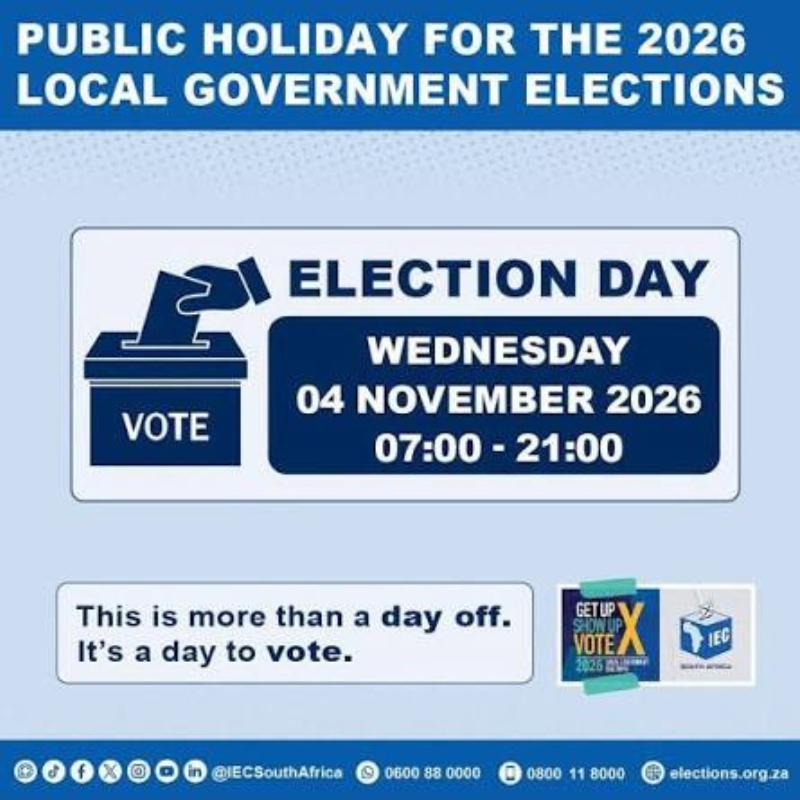
With just about two weeks to go before the 4 November local government elections, South Africa finds itself at a critical political conjuncture. The architecture of political power has fundamentally shifted since the watershed 2024 general elections. For the first time since 1994, the African National Congress (ANC) lost its electoral majority, precipitating a governing coalition, named the Government of National Unity (GNU) and disrupting the edifice of one-party rule.
Yet the significance of 2024 lies beyond the arithmetic of a diminished ANC majority. It marked a rupture in the political order that had organised democratic South Africa for three decades and exposed the limits of the established political settlement without resolving the question of what should replace it.
In his Prison Notebooks (1929-1935), Antonio Gramsci examines periods in which political conjunctures are disrupted and competing forces struggle to establish a new political and social order. South Africa’s present conjuncture bears some of these characteristics: The old political order has weakened, but a sufficiently coherent alternative governing vision has yet to emerge.
The central question is therefore not simply who can dislodge the ANC, assemble a coalition or secure control of government. It is what those seeking power intend to do with it.
Further reducing the ANC’s majority is an electoral objective, not a national vision. Neither its removal from a municipality nor its eventual defenestration from national government in 2029 would, by itself, constitute national renewal.
Electoral change may open the door to a different political settlement, but the consequences will depend on what replaces the incumbent, the coherence of its governing programme and its capacity to implement it.
A closer reading of the election manifestos released thus far, including some political debates broadcast by media houses, suggests that political competition risks becoming a contest over who controls public office rather than a substantive debate about what public power should achieve. Parties court voters with ambitious promises, position themselves against their opponents and seek to convert dissatisfaction with incumbents into electoral advantage. Yet the larger national project around which these competing ambitions should be organised remains insufficiently articulated.
For opposition parties, the temptation is to treat declining ANC support as proof that their own political propositions are gaining national acquiescence. But a vote against the dominant party is not necessarily an endorsement of a coherent alternative. It may reflect frustration with service delivery, dissatisfaction with particular leaders, a demand for, accountability or a rejection of established political loyalties. Opposition parties cannot automatically interpret the erosion of ANC support as a mandate for their own national visions. They must demonstrate that they offer more than an alternative route to office.
Coalitions illustrate this distinction. They can broaden representation, encourage negotiation and compel parties to accommodate competing interests. But they can also become arrangements for distributing positions, managing rival ambitions and securing short-term political survival. The language of political mongrelisation sometimes surfaces in debates about coalitions, where the coalescing of parties with different ideological traditions is viewed as a dilution of political identity. But ideological heterogeneity among coalition partners is not inherently disqualifying; the real test is whether those differences can be reconciled around a coherent, publicly accountable programme.
A political system can become more competitive without becoming more capable. It can produce new parties and shifting governing coalitions while leaving the underlying wreckage of economic exclusion and the anatomy of administrative weakness and institutional dysfunction largely intact.
The crisis of political imagination
Politics concerns not only the distribution of power but also the ideas through which societies interpret their circumstances and imagine possible futures.
In The Imaginary Institution of Society (1975), Cornelius Castoriadis examines how societies constitute and reconstitute themselves through what he terms “social imaginary significations”: shared meanings, values and conceptions of what is possible. South Africa’s political history has been animated by powerful imaginaries: liberation, reconciliation, the promise of a better life, transformation, the developmental state and the African Renaissance.
These ideas did more than decorate political speeches. They helped organise political expectations and collective action. Yet the failure to translate important developmental commitments into sustained outcomes has weakened public confidence in the political system’s capacity to deliver on its promises.
Political narratives remain indispensable. As Chiara Bottici explores in Imaginal Politics (2014) and A Philosophy of Political Myth (2007), images, symbols and narratives help societies interpret political reality. Stories of liberation, betrayal, corruption, transformation and renewal shape how parties understand themselves and portray their opponents.
The danger arises when these narratives become substitutes for the hard work of explaining how the country should be governed and developed. The ANC cannot rely indefinitely on the durability and lasting aura of its liberation credentials to answer contemporary questions of economic performance and state capability. The historical significance of the liberation struggle remains part of South Africa’s democratic inheritance, but historical legitimacy cannot serve as a permanent exemption from accountability.
Opposition parties face a corresponding obligation. They cannot rely indefinitely on the ANC’s failures to establish the credibility of their own alternatives. Presenting themselves as different is not equivalent to demonstrating how they would govern differently.
Political identity is not a development strategy. Opposition is not a governing programme. Electoral momentum is not a national mandate unless it is connected to a credible account of what political power is intended to achieve.
Nor can national renewal be reduced to nostalgia for an earlier political configuration or the acceleration of its demise. Charismatic leadership, rhetorical ingenuity and memorable political vignettes can generate momentum, but they cannot substitute for institution-building. They can also reduce complex questions of public policy to contests of personality, descending into a spectacle of public vitriol, replete with a litany of slurs and ad hominem attacks.
Political communication should illuminate choices rather than obscure them; criticism should be accompanied by an explanation of what must change and how that change can be achieved.
From political promises to developmental capability
South Africa is not short of evidence with which to inform this debate. Stats SA provides data on demographic trends, education, health, household conditions, income distribution, industrial production, manufacturing capacity utilisation, GDP and broader socioeconomic conditions. The Auditor-General assesses public-sector financial management, performance reporting and compliance, exposing weaknesses in accountability and institutional effectiveness.
The Department of Trade, Industry and Competition (DTIC) provides a policy lens on industrial development, manufacturing competitiveness, investment, exports and the structural constraints on productive capacity. The South African Reserve Bank supplies information on the balance of payments, foreign reserves, external financing, monetary conditions and financial stability. National Treasury provides the fiscal evidence required to assess public expenditure, debt, fiscal sustainability, municipal finances and the allocation of resources across government. The Department of Cooperative Governance and Traditional Affairs (COGTA) and the departments responsible for education and health contribute further evidence on institutional performance and human development.
Taken together, these institutions provide an empirical foundation for asking questions that should sit at the centre of electoral debate. Is South Africa expanding its productive capacity? Is investment sufficient to sustain growth? Are educational and health outcomes strengthening human capabilities? Can municipalities convert public resources into reliable services? Is the state allocating resources in ways that expand economic opportunity and improve the country’s long-term prospects?
These are not merely technical questions for economists, auditors, statisticians and public administrators. They concern political choices and democratic accountability. They should inform electoral programmes and provide a basis for assessing whether political mandates translate into measurable progress.
Yet the vocabulary of our politics remains familiar: economic growth, jobs, service delivery, infrastructure, transformation, safer communities and accountable government. These objectives are indispensable, but repeating them does not amount to a vision.
Three decades into constitutional democracy, the country faces a constellation of challenges of anaemic economic growth, persistently high unemployment, entrenched inequality, alarmingly high crime rates, infrastructure deficits, institutional fragility and increasingly uneven public services.
In Q2 2026, real GDP contracted by 0.2% quarter-on-quarter – ending a streak of six consecutive quarters of meagre economic growth, while official unemployment stood at 33.6%, with 8.5 million people unemployed. Youth unemployment reached 47.4%. Alongside entrenched inequality, infrastructure deficits, high crime and uneven public services, these figures expose the chasm between the promise of democratic citizenship and the lived experience of millions of South Africans.
The question confronting political parties is not simply whether they recognise these conditions, but whether they can explain how their programmes would change them. What economic model do they propose? How will they expand productive investment, strengthen domestic industry and create employment? What should the state provide, enable or regulate? How will they improve public administration, address inequality and expand economic opportunity? What trade-offs will their proposals require, and how will progress be measured?
A credible governing vision must connect objectives to priorities, resources, institutional capabilities and measurable outcomes. Without these connections, manifestos risk becoming catalogues of desirable promises rather than strategies for national development.
Local government as a test of governing capability
The 2026 elections bring these questions into sharp focus because municipalities are where the state’s capacity, or incapacity, to govern is experienced most directly. Water interruptions, unreliable electricity infrastructure, refuse collection, deteriorating roads, procurement failures and weak local economic development expose the distance between political authority and administrative competence.
The elections should therefore test whether parties can negotiate coalitions around programmes rather than positions, establish clear lines of accountability and connect local priorities to broader developmental objectives. A coalition agreement that distributes mayoral offices and committee positions without defining priorities, implementation mechanisms and measurable outcomes is an arrangement for sharing power, not a governing vision.
The relevant measure of political change is not simply whether an incumbent has been removed. It is whether the successor administration manages public finances more effectively, delivers reliable services, maintains infrastructure, strengthens institutions and expands economic opportunities.
Municipal performance also has implications beyond local government. Poor infrastructure and unreliable services constrain investment, undermine businesses and weaken public confidence in the state. Conversely, capable municipalities can support economic activity, improve the investment environment and create conditions for more inclusive local development.
The 2026 elections are thus an opportunity to assess whether political competition can produce more capable administrations. They are also a reminder that national renewal cannot be achieved through national political realignment alone. It requires functioning institutions at every level of government.
A country that already has a plan
South Africa does not lack an overarching national development framework. The National Development Plan (NDP): Vision 2030, adopted in 2012, established ambitions for economic growth, employment, poverty reduction, reduced inequality and a capable developmental state.
The National Planning Commission’s 2023 ten-year review of the NDP highlighted the gap between these ambitions and actual outcomes. Economic growth had averaged approximately 1-1.3% annually, far below the NDP’s ambition of more than 5%. Unemployment had risen rather than moving towards the plan’s 6% target, while weaknesses in state capability and persistent infrastructure constraints continued to undermine development.
The GNU’s Medium-Term Development Plan for 2024-2029 seeks to reconnect government priorities with the NDP’s longer-term objectives. But another planning framework cannot, by itself, resolve the persistent failure to translate national commitments into sustained results.
The crisis is therefore not simply one of vision. It is a crisis of political clarity, implementation and credibility. South Africa must revisit the assumptions underpinning its developmental trajectory and forge a compelling conception of the future, supported by institutional capability and the political discipline required to realise it.
This does not demand ideological uniformity. Whether parties favour a developmental, enabling, redistributive or more decentralised state, their ambitions depend on a common institutional foundation: a professional public administration, ethical leadership, constitutional accountability, clear lines of authority and the ability to implement policy consistently.
Legislation, such as the recently enacted Public Service Commission Act, the Public Service Amendment Act and the Public Administration Management Amendment Act, intended to strengthen public-service oversight, professionalisation and administrative integrity forms part of this agenda. But legal reform is only the beginning. Its value depends on whether it changes how public institutions are resourced, managed and held accountable.
The strategic challenge is to build a state capable of implementing democratic choices, pursuing economic transformation without sacrificing institutional discipline, and exercising public power in ways that improve people’s lives. State capacity is not a technocratic footnote to development; it is part of the infrastructure through which constitutional rights and democratic aspirations become meaningful in practice.
Amartya Sen’s Development as Freedom (1999) provides a useful measure of this purpose: development should expand people’s substantive freedoms and capabilities, rather than focus exclusively on aggregate economic performance. A right that exists formally but cannot be realised because infrastructure is failing, public institutions are dysfunctional or economic opportunity remains inaccessible presents a profound challenge to democratic legitimacy.
This places an especially demanding burden on political leadership.
Leadership beyond political survival
The leadership required to negotiate the democratic transition is not identical to that needed to govern a constitutional democracy confronting stagnation, institutional fragility and social fragmentation. The 1994 moment demanded negotiation and reconciliation; the aftermath of state capture required institutional restoration; the 2024 elections disrupted dominant-party rule. The present moment demands leadership capable of setting priorities, strengthening institutions and sustaining a national project beyond electoral cycles.
Nelson Mandela and his leadership cohort demonstrated how political imagination, negotiation and reconciliation could secure a democratic transition while preserving a common future. International experiences, including those of Singapore under Lee Kuan Yew, the United Arab Emirates (UAE) under Sheikh Zayed bin Sultan Al Nahyan, Turkey during Mustafa Kemal Atatürk’s reign – albeit through a highly centralised and authoritarian model, or Saudi Arabia under King Abdulaziz bin Abdul Rahman bin Faisal Al Saud, offer further lessons about institution-building and long-term development.
These experiences are not morally or institutionally equivalent, nor are they templates for contemporary South Africa to simply copy. Their relevance lies in demonstrating that consequential leadership does more than manage the pressures of the present. It must establish institutions, mobilise capabilities and sustain strategic purpose beyond individual personalities.
Vision without capability risks becoming rhetoric. Administrative competence without strategic ambition risks managing decline. Electoral strategy without either reduces politics to a permanent campaign in which occupying public office becomes the prize and governing a secondary consideration.
Political parties should be schools of leadership and intellectual renewal, not merely vehicles for electoral mobilisation. National renewal requires leaders across political parties, public administration and civil society who can connect democratic mandates to a sustained developmental purpose.
Beyond the politics of displacement
The 2029 general elections, which will take place just a year before the NDP reaches its maturation date, should provide an opportunity for a substantive contest over national direction. That contest must extend beyond the fortunes of individual parties and the question of who replaces whom. Citizens deserve clearly articulated alternatives, credible priorities and an honest account of the resources, capabilities and trade-offs required to realise competing visions.
The period between now and 2029 should be used to develop, test and refine those alternatives. The local elections can expose governing capability; the national elections should enable voters to choose between substantive conceptions of South Africa’s future.
The NDP already provides a framework against which national progress can be assessed. The challenge is to build the political consensus, institutional capability and discipline required to translate its developmental commitments into sustained outcomes. That demands more than another slogan or political rebranding. It requires public-spirited leadership, a willingness to serve and sacrifice, and a demonstrable proximity to the people whose lives political power is meant to improve.
A declining majority, a new coalition or an electoral breakthrough may catapult leaders into positions of influence, but influence is only the beginning of political responsibility. Without a credible governing agenda, electoral momentum can dissipate into internal competition, coalition disputes and administrative inertia.
The central task confronting South Africa is to move beyond the tactical business of defeating opponents towards the strategic work of building the country. Electoral change may create the conditions for renewal, but it cannot guarantee it. National renewal will begin when the pursuit of political power becomes subordinate to the responsibility of exercising it and when the measure of political success shifts from who governs to what governing makes possible for the country and its people.