
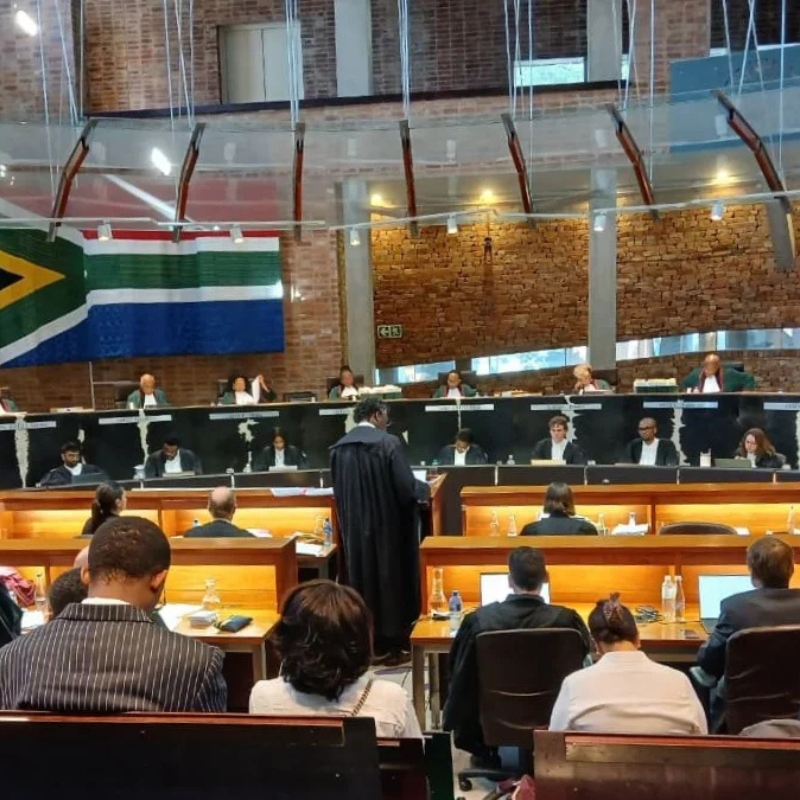
After more than a decade of litigation, the Constitutional Court delivered a verdict in the Wild Coast NPC v Minister of Mineral Resources and Energy [2026] and set aside petroleum companies Shell and Impact’s exploration rights.
The judgment is significant not only because of its implications for offshore oil and gas exploration, but because it once again places meaningful public participation at the centre of South Africa’s constitutional and policy-making architecture.
The Illusion of Consultation
The ConCourt noted that even though the companies published notices in newspapers and consulted with traditional leaders, they ignored pleas to engage directly with community members. Instead, they identified “interested and affected parties” through consultants rather than through genuine public processes. The High Court previously called this process “more illusory than real” and the ConCourt agrees.
The lack of meaningful public consultation is becoming a common occurrence in South Africa’s policy making architecture. We now have a number of judgements against government and parliament that have halted the implementation of policies or legislations on the basis that they did not meaningfully engage the public. The 2023 Constance Mogale and Others v Speaker of the National Assembly and Others made the same point in the legislative context. Parliament cannot simply tick a box and claim it has facilitated public involvement. The participation must be meaningful, accessible, informed, and genuinely responsive to the voices of those affected.
The Government’s Own Promises: A Contradiction
What is most frustrating is that South African government already knows all of this, as its own policy frameworks are explicit about the importance of inclusive decision-making and meaningful consultation. The Socio-Economic Impact Assessment System (SEIAS) introduced in 2015 and the National Policy Development Framework (NPDF) adopted in 2020, are examples of such frameworks. Thy require all new legislation and significant policy changes to undergo a rigorous assessment of their socio-economic impacts before they are finalised.
The SEIAS guidelines are unequivocal: public consultation is not an afterthought but a core component of the assessment process. Policymakers are instructed to identify affected stakeholders, engage with them early and often, and incorporate their input into the final policy design. Similarly, the NPDF explicitly states that public participation is essential for the legitimacy, quality, and sustainability of policy decisions. It recognises that communities have a right to be heard and that their knowledge and perspectives improve decision-making.
Yet the gap between what government says it believes about consultation and how consultation is sometimes conducted in practice remains striking.
The Wild Coast judgment is a particularly powerful illustration of that contradiction. The same state that has developed frameworks promoting inclusive policy-making ultimately defended a process in which communities most directly affected by a decision argued that they had not been meaningfully heard.

The Cost of Cutting Corners
There is also a practical lesson here for both government and business: poor consultation is not necessarily the faster or cheaper option.
It is reported that Shell and Impact spent approximately R1.1 billion following the granting of the exploration rights in 2014. After more than a decade of litigation, the project has now been set aside.
It is impossible to know precisely how much of that expenditure could have been avoided through a genuinely participatory process at the outset. But the broader lesson is clear: inadequate consultation can create significant legal, financial, reputational and operational risks.
The same principle applies to Parliament. The Mogale judgment highlights a similar dynamic in the legislative sphere. When Parliament rushes legislation without meaningful public involvement, it risks having those laws struck down. The result is not faster implementation but greater delay in the very outcome that expediency was supposed to avoid.
Why Consultation Matters More Than Process
Perhaps the most important aspect of the Wild Coast judgment is its recognition that consultation is not simply about giving people an opportunity to speak.
The ConCourt in the judgement states that “Consultation is not merely about the opportunity to express a view or influence an outcome. On a more fundamental level, regardless of whether input has any effect, it is a process which affirms human dignity by affording a seat at the table to those whose lives are impacted by decisions.”
This principle deserves much greater attention in South Africa’s policy environment. Government and parliament should start taking heed of such judgements and stop treating consultation as a procedural formality, that implies that communities are obstacles to be managed rather than partners to be respected.
Too often, communities are treated as stakeholders to be managed rather than citizens whose knowledge, interests and lived experiences should inform decision-making. Consultation becomes a compliance exercise: publish the notice, hold the meeting, record the attendance register and move on.
What the Judgement Affirmed
The Constitutional Court has once again affirmed that meaningful consultation is non-negotiable. Government and parliament should start taking its own guidelines and policies on meaningful consultation more seriously, as the consequences of inadequate consultation can be costly from a financial and time point of view.
As a public affairs advisory, Frontline Africa Advisory has now for over a decade, been monitoring and participation in South Africa’s policy making process and time and again, the same issues, especially around meaningful consultation, always creep up. The question now is whether the lesson has been learnt. Going forward, it can only be hoped that policy makers embrace genuine consultation as a constitutional value and close gap between its own policies and its practices.
