
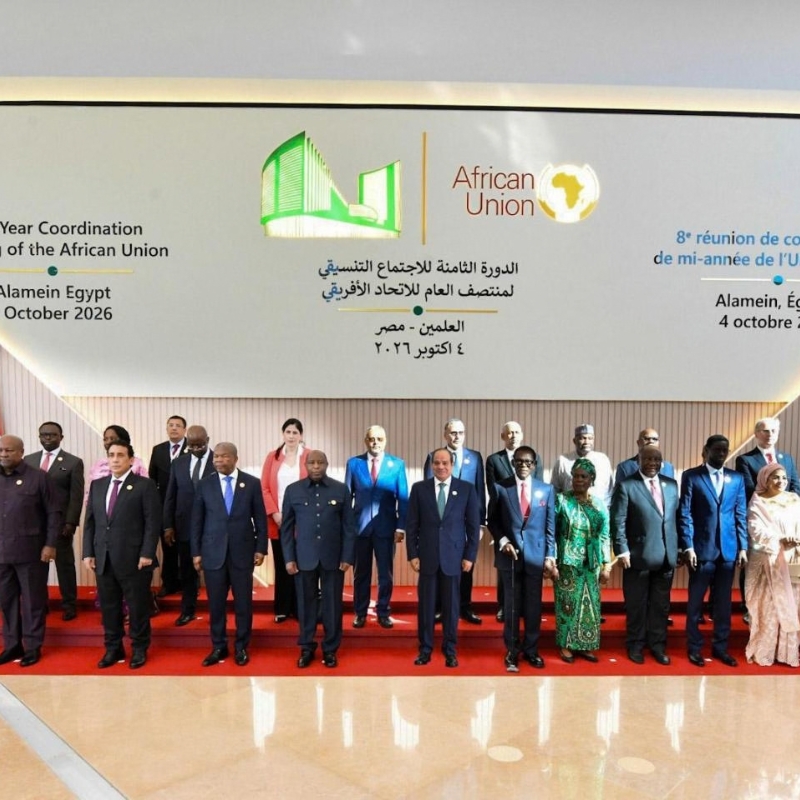
African Heads of State and Government, the leadership of the African Union Commission, Chairpersons and representatives of the Regional Economic Communities (RECs), and Regional Mechanisms (RMs), senior representatives of AU institutions and partners met on 4 October, for the 8th Mid-Year Coordination Meeting (MYCM) in Egypt, to advance continental integration and the implementation of Agenda 2063.
Based on the progress reports and commitments made by leaders, the continent is gaining momentum from visionary declarations to tangible action. This movement from aspiration to implementation marks a critical juncture in Africa’s journey toward genuine integration, and nowhere is this more evident than in the increase in intra-African trade and the unfolding implementation of the African Continental Free Trade Area (AfCFTA).
The MYCM served as both a mirror and a map for the continent’s journey. It reflected collective achievements while charting the difficult terrain ahead. Most importantly, the meeting reaffirmed what many have long understood: that RECs are not just administrative entities but vital building blocks of continental integration and key to achieving the mandate of the AfCFTA.
Increase in Intra-African Trade
Over the past five years, intra-African trade has experienced a gradual but meaningful transformation. Starting from a modest baseline of around 15-17% of total African trade before the AfCFTA’s launch, we have seen this figure begin its slow climb toward what recent estimates suggest may be 18-20% today. This progress, while not explosive, represents an important directional shift. Sectors such as automotive manufacturing, pharmaceuticals, and agro-processing have started to benefit from reduced tariffs and preferential arrangements.
The establishment of agreed rules of origin, which determine which products qualify for preferential treatment under the agreement, has been a significant development, with over 88% of tariff lines now having harmonised rules, providing clarity and predictability for traders. This technical accomplishment may seem bureaucratic, but it is fundamental. Without clear rules of origin, preferential trade cannot function effectively. The fact that 54 countries submitted their tariff concession schedules, with 41 already trading under these terms, demonstrates a remarkable level of engagement and commitment across diverse economies.
The creation of supporting digital infrastructure has been another critical enabler. The Pan-African Payment and Settlement System (PAPSS), launched in 2022, allows businesses to settle intra-African trade transactions in local currencies, reducing dependency on hard currencies like the US dollar or Euro and cutting transaction costs significantly. This innovation addresses a longstanding barrier to intra-African trade: the high cost and complexity of cross-border payments. Similarly, the AfCFTA Adjustment Fund has become operational to help countries, particularly least developed nations, adapt to the new trading environment and support vulnerable sectors during the transition period.
More is still to be Done – The Journey Ahead
Although, progress in increasing intra-Africa trade in worth noting, there are factors that still need to be efficiently addressed. The meeting noted several priorities that need to be addressed with urgency. RECs must accelerate the harmonisation of customs procedures and focus intently on developing regional value chains in strategic sectors. Digital transformation presents both opportunity and obligation. The Implementation of the Digital Trade Protocol must advance to harness Africa’s burgeoning digital economy, while digital identity and payment systems require accelerated implementation to reduce the friction of cross-border commerce.
The ongoing negotiations around intellectual property rights, investment protocols, and competition policy reveal the complex realities of harmonising 54 diverse economies. The slow resolution of non-tariff barriers through the online reporting mechanism exposes the gap between digital platforms and ground-level enforcement capacities.
On another front, non-tariff barriers including cumbersome customs procedures, restrictive visa regimes, and divergent product standards continue to impede trade flows more than tariffs ever did. Infrastructure deficits, particularly in transport and energy, keep trading costs high. Political tensions in some regions have occasionally strained the cooperative spirit necessary for trade integration.
Uneven implementation could also shape where the gains from integration accrue. States that combine preferential access with reliable infrastructure and predictable border procedures are better placed to attract investment serving regional markets.
Peace and Security as Precursors to Economic Prosperity
The meeting also highlighted the reality of understanding integration beyond economics. The discussions around peace, security, and governance acknowledged what history has repeatedly taught us: political stability is not merely complementary to economic integration but fundamental to it. The joint initiatives between AU and RECs to address conflicts in the Sahel, Great Lakes, and Horn of Africa recognise that trade corridors cannot flourish amidst conflict zones, that economic aspirations cannot thrive where basic security remains elusive.
Most importantly, integration must be inclusive. The participation of women-led businesses and youth entrepreneurs cannot be an afterthought but must be central to implementation strategies. The private sector must also form part of policy dialogues, so that the AU’s frameworks align with commercial realities rather than bureaucratic conveniences.
The monitoring and accountability mechanisms proposed during the meetings, particularly the annual scorecards for RECs and member states could transform how progress is measured. The tools, if implemented transparently, could shift focus from ceremonial commitments to measurable outcomes.
In Conclusion
The 8th Mid-Year Coordination Meeting provided both a progress report and a renewed mandate for the African leaders. With sustained political will, enhanced coordination, and active citizen engagement, the aspirations of achieving deeper economic integration will be matched with implementation.
Thus, the next phase of implementation will test Africa’s commitment to deeper integration. The ongoing negotiations on intellectual property rights, investment protocols, and competition policy involve complex trade-offs between national sovereignty and continental harmonisation. The digital economy presents both opportunity and regulatory challenge as e-commerce transcends borders. Ensuring that integration benefits are widely shared, particularly for women and youth, must be an imperative for successful implementation.