In a landscape long shadowed by rolling loadshedding and economic uncertainty, Eskom’s latest power system update, released on 30 January 2026, signals not just operational recovery, but a strategic inflection point for South Africa’s business sector. As the nation’s primary electricity supplier, Eskom has endured years of scrutiny for its role in stifling economic growth, yet this update reveals a narrative of deliberate turnaround, underpinned by data-driven initiatives that seem to be finally bearing fruit. For business leaders, investors, and entrepreneurs, this is more than a technical bulletin; it is an argument for renewed optimism, where stable energy becomes the foundation for sustainable expansion rather than a perpetual drag.
Amongst the positives reported by Eskom include over 260 days without the implementation of load shedding, and average Energy Availability Factor (EAF) being at 64.95% this financial year. Additionally, unplanned breakdowns have dropped sharply too: in the last week of January 2026, Eskom averaged 8,362 MW, down by more than 4,600 MW compared to the same time last year. Diesel costs are down to R6.23 billion, which is 40% lower than the R10.49 billion spent in the same period last year.
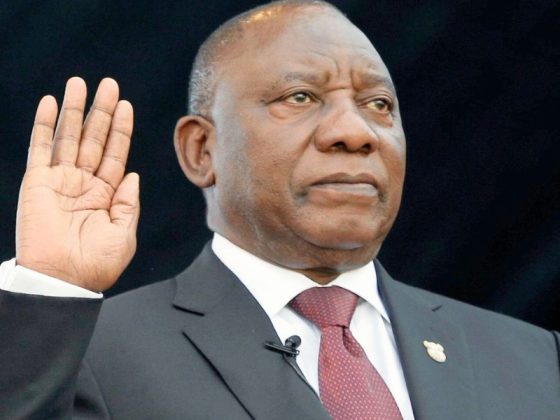
The positive story about Eskom’s turnaround begins with the Energy Action Plan (EAP) announced by President Cyril Ramaphosa in July 2022 outlining a bold set of actions aimed at fixing Eskom and adding as much new generation capacity as possible, as quickly as possible, to close the gap in electricity supply, end load shedding and achieve energy security. This saw government embarking on an intensive maintenance push over the last three years and returning of key units at three major power stations: Kusile, Medupi and Koeberg, back into service.
At Kusile Power Station, the final Unit 6 was synchronized to the grid in March 2025 and reached commercial operation late last year, adding 800 MW of modern coal-fired baseload power after years of construction delays. Similarly, Medupi Unit 4, taken offline in 2021 following a generator explosion, was restored and brought back online in July 2025, providing another 800 MW to bolster supply. On the nuclear front, Koeberg Unit 1 was successfully reconnected in October 2025 after critical life-extension maintenance, including steam generator replacements, delivering 930 MW of clean, 24/7 baseload energy while extending the plant’s operational life by 20 years. These actions have injected over 2,500 MW of reliable capacity back into the national grid.
This increased capacity has not only enhanced grid stability and energy security, but also freed up resources for further investments, allowing businesses to operate with confidence, plan long-term growth, and reduce their own costly backups, turning what were once symbols of energy woes into pillars of South Africa’s economic revival.
The Benefits of a Stable Eskom
The turnaround of Eskom has benefits that extend far beyond the power grid, it underpins South Africa’s broader economic momentum. In its January 2026 Monetary Policy Committee statement, the South African Reserve Bank described the economy as being on a steadier, upward trajectory, with growth recorded for four consecutive quarters, household consumption strengthening, and forecasts pointing to gradual improvement toward 2% over the medium term, with some upside potential. A major reason for this optimism is the dramatic reduction in energy disruptions, with stable electricity supply removing a critical barrier that once choked production, deterred investment, and eroded business confidence.
South Africa’s economy has long been throttled by Eskom’s instability; with loadshedding shaving an estimated 1-2% off annual GDP growth in peak crisis years, disrupting manufacturing, mining, and services alike. Unpredictable power forced companies into survival mode, with rushed procurements of generators, solar panels, and batteries, often at premium costs. This reactive scramble distorted capital allocation, inflating operational expenses and eroding competitiveness. Now, with stable electricity supply and no threats of the grid collapsing, businesses can now operate without the constant threat of blackouts, plan expansions with greater certainty, and allocate resources to growth rather than contingency measures. Thus, Eskom’s turnaround, through better plant performance, lower unplanned outages, and massive savings on diesel, is not just fixing power; it is helping fuel the conditions for sustained economic recovery and higher long-term potential.
In essence, Eskom’s turnaround is not an isolated victory; it is a foundational argument for South Africa’s economic resurgence. The data paints a picture of sustained progress, where programs like the Generation Recovery Plan and load reduction elimination have not only stabilised the grid but unlocked fiscal headroom for reinvestment. For businesses, the implication is profound: an economy cannot thrive when its energy backbone falters, but with reliability restored, the focus shifts from mitigation to multiplication. Leaders should seize this moment to recalibrate strategies, leveraging Eskom’s momentum to drive innovation and efficiency.