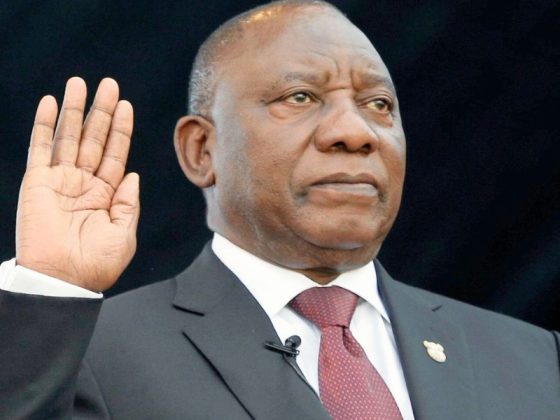
On 14 June 2024, following a historic election where the African National Congress (ANC) failed to garner an outright majority of national votes, Parliament held its first sitting, where Cyril Ramaphosa was elected South Africa’s President. It was the first time since the dawn of democracy that the ANC needed votes from other parties in Parliament to help elect its leader as the president of the country.
With the ANC failing to get an outright majority in the May 29 elections, changes were expected not only in government, but in Parliament as well. While there are debates on whether the Government of National Unity (GNU) is on the right path after a year, equally there are questions on whether parliament is finally fulfilling its conceived constitutional role or its more of what we are accustomed to in democratic South Africa.
In 2024, many people expressed hope that the 7th Parliament would be robust and that the country would see Parliament hold the executive to account more than previously where the ANC held a parliamentary majority.
As the ANC is learning to conduct itself under a multiplicity government – where it no longer has a say in the making of decisions affecting the country without consulting, other political parties, especially those in the GNU, are learning to balance being in government and trying to be opposition as well. Minister of Finance Enoch Godongwana put the changed dynamics in Parliament succinctly at a briefing on the Budget on 30 April by stating that “under previous ANC majorities, the Budget process was relatively straightforward: Treasury would prepare the Budget, present it to Parliament, and the ANC would approve it”. Furthermore, the ANC received a wakeup call over the decrease in its majority influence after one of the major partners in the Government of National Unity (GNU), the Democratic Alliance (DA), refused to support the budget due to its value added tax (VAT) increase.
As such, one year onwards there are rays of positivity over South Africa’s budding democracy, where the events of the last year heighten expectations that the dynamics of the 7th Parliament will bode well for the “new path” and Parliament will be seen playing a greater role of holding the executive to account as envisaged by the constitution. There are hopes that exist that within this “new path” and that Members of Parliament (MPs) will prioritise accountability to the Constitution over party loyalty.
Past Parliaments- Shielding the Executive from Accountability
In the past, the ANC effectively used its majority to shield its presidents and ministers from accounting to Parliament. In some instances, parties in Parliament were compelled to seek the intervention of the courts to hold the executive to account.
The failure of Parliament to play its role under ANC majority rule was put into sharp focus by the State Capture (Zondo) Commission (volume 6, June 2022), which probed state corruption during former President Jacob Zuma’s tenure (2009-2018). Then Deputy Chief Justice Raymond Zondo, the Commission Chair, cited lack of effective oversight as a factor contributing to the ease with which the executive and its fellow travellers were able to corrupt the public administration during the Zuma presidency. It was the lack of effective oversight that led to the collapse of many State-Owned Enterprises (SOEs) that to this day, government has struggled to return them back to their pre-state capture glory.
Phala Phala
Another prime example of the ANC using its majority to shield its own from scrutiny and accountability is Parliament’s handling of the Phala Phala farm theft scandal, where President Cyril Ramaphosa was implicated in a potential cover-up of a foreign currency theft from his private game farm. In December 2022, an independent panel led by retired Chief Justice Sandile Ngcobo found that there was prima facie evidence that the president may have violated the Constitution and anti-corruption laws by failing to report the crime. However, when the National Assembly voted on whether to adopt the panel’s report and launch a full parliamentary inquiry, the ANC leveraged its majority to block the motion.
SAA
Another to take note of is the almost sale of South African Airways (SAA) to the Takatso Consortium. In 2023, members of the opposition in the Portfolio Committee on Public Enterprises, pushed for a probe into the controversial partial sale of SAA. However, repeated calls from opposition MPs and the Special Investigating Unit (SIU) for transparency where rebuffed, as ANC MPs aligned with Minister Pravin Gordhan in resisting efforts to compel the release of key documents, including the shortlist of bidders and financial evaluations. Parliament only referred the deal to the SIU in March 2024 – after the transaction had already collapsed.
Changing Tides?
It is to be noted that the ANC still dominates portfolio committees and its MPs chair 22 out of 30 committees. However, recent events have indicated that this does not mean that the ANC will continue with its noted pattern of acting as shields for the executive. An example is seen in the developments on the appointments of politically linked individuals to Sector Education and Training Authority (SETA) boards.
Members of the Portfolio Committee on Higher Education and Training placed pressure on the Minister of Higher Education and Training Dr Nobuhle Nkabane to be transparent about the process followed in appointing politically linked individuals to the SETA boards. This showcased the potential of Parliament to hold the executive to account in the absence of a majority political party suppressing the accountability mechanism of Parliament.
MPs’ relentlessness on the matter, supported in part by the Chairperson led to the intervention of the President, which saw the appointments reversed and an instruction for the Minister to submit a report on the process undertaken to appoint board members to the SETAs.

More to be done
Barring the one example provided above, Parliament is still facing challenges in getting Ministers to account. These include Ministers taking time to reply to questions posed by MPs, should they reply, and not providing satisfactory responses. A report released by Parliament in March showed that of the 783 questions submitted by MPs to Ministers, 222 questions received no replies.
What can be done?
Parliament’s Strategic Plan for the 7th Parliament (2024–2029) provides a clear roadmap for enhancing its role in ensuring government accountability, fostering public participation, and addressing South Africa’s socioeconomic challenges through a transformative legislative agenda. If followed, the plan provides a playground for fair play in Parliament, ensuring that executives are held accountable, whilst also empowering the public to participate.
Some of the gaps highlighted by Parliament that need improvement include Strengthening Oversight to monitor government responsiveness and implement accountability frameworks; and Enhancing Legislative Processes and public involvement to provide meaningful and adequate opportunities for people to be involved in legislative and other processes. These gaps were highlighted considering the number of legislations that were overturned by the courts for being constitutionally invalid and not ensuring adequate public participation.
With 4 years to go, there is time for Parliament to turn the tide and reverse the damage done over the past years, where Parliament at times acted as an extension of the executive and not an oversight body. For now, the public will hope that the actions of the portfolio committee on higher education and training in reversing the appointments of SETA board members chairpersons becomes the norm for the 7th parliament. In that way Parliament will reclaim its role in building a capable, ethical, and developmental state, ensuring efficient governance rooted in integrity and accountability to strengthen the state’s capacity to deliver services, uphold the rule of law, and build public trust.